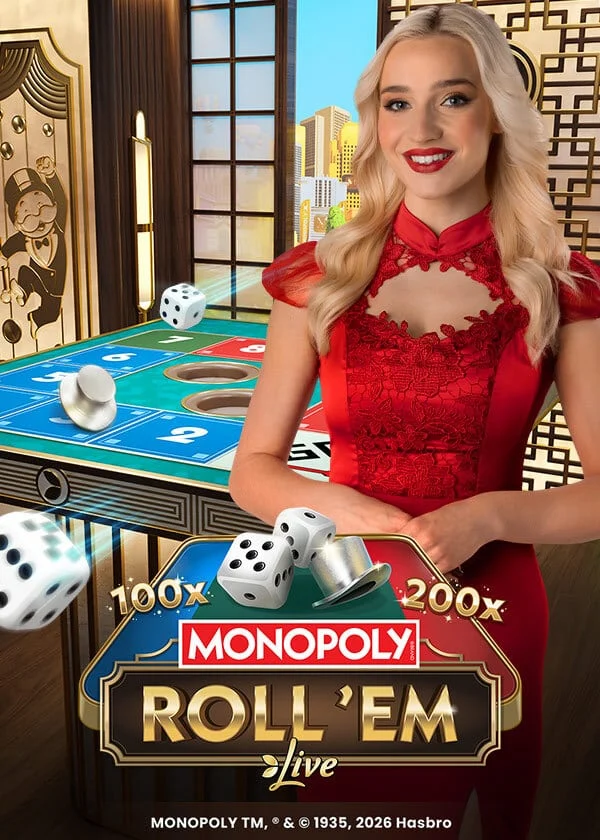
The game at a glance
| Topic | What it means |
|---|---|
| Format | Two dice, twelve-square board |
| Key rule | Low 2–6; Seven 7; High 8–12 |
| Feature | Building multipliers up to 300× |
Ranges are not equal probabilities
The main choices include Low for totals 2–6, Seven for 7, High for 8–12, and individual totals. A twelve-square graphic does not mean that every dice total has equal probability. In a simple fair-dice model, seven can be formed in six ordered ways, whereas two has only the 1+1 combination. That illustration explains the mechanism, not the certified return of the live product.
The Building Phase
After betting ends, the Building Phase places houses on the board. Houses can accumulate multipliers, with the official overview advertising values up to 300×. The dice result then determines the destination. A large displayed multiplier is therefore not an amount that every participant receives: it must be read alongside the selected wager and the actual result.
Reading a complete round
Evolution announced the launch on 15 July 2026. For a practical review, follow one round in sequence: ticket, building phase, two dice and settlement. Keep the total stake visible if several outcomes were selected. The current paytable is needed to distinguish profit from returned stake; the launch headline alone cannot establish RTP or the average cost of a session.
Low, Seven and High compared
Low and High are ranges, while Seven is a single total. In an illustrative fair-dice calculation, Low has fifteen ordered combinations, High also has fifteen, and Seven has six out of thirty-six. This is useful for checking a claim that the three labels are equally likely; it is not a recommendation to choose the larger category. Different payments and the Building Phase prevent raw frequency from measuring value on its own. If a ticket combines a range with an individual total, keep both amounts visible: visual overlap on the board does not merge two paid selections into one free position.
THE PRACTICAL DESK
Put the numbers to work
Change the example inputs to see how the arithmetic changes. These tools use the figures you enter; they do not read your casino account or predict a game result.
Round balance
Spending plan
Questions about this game
Is this MONOPOLY Live?
No. Roll ’em uses two dice and a twelve-square board with a Building Phase.
Are all dice totals equally likely?
No. Under a fair two-dice model, different totals have different numbers of combinations.
Official game information
Game details checked against Evolution’s product material. The active table’s help defines the edition, limits and settlement used by your operator.