Red Door Roulette
Read one Red Door Roulette round from start to finish
Follow Red Door Roulette as a sequence of actions: select, review the full stake, wait for acceptance and read the completed settlement. Use the worked figures alongside the rules so that a winning position is not confused with a profitable round.
Place the selection during the betting window; the keys are revealed only after that window has shut. Read the round in chronological order. The later feature animation is part of resolving an accepted bet, rather than a fresh opportunity to add a wager after seeing the key map.

Guide sections
1. Identify the table and its rules
Verify the complete Red Door Roulette title and Evolution label before opening the help panel. Read minimum and maximum stakes for each category. Currency and cash caps can vary with the operator and jurisdiction, so a limit quoted elsewhere should not be assumed to apply to the table you have opened.
Locate the account’s personal-history control before starting. That record contains the settlement evidence for accepted wagers that a public game-results page cannot provide.
2. Place chips and inspect the complete total
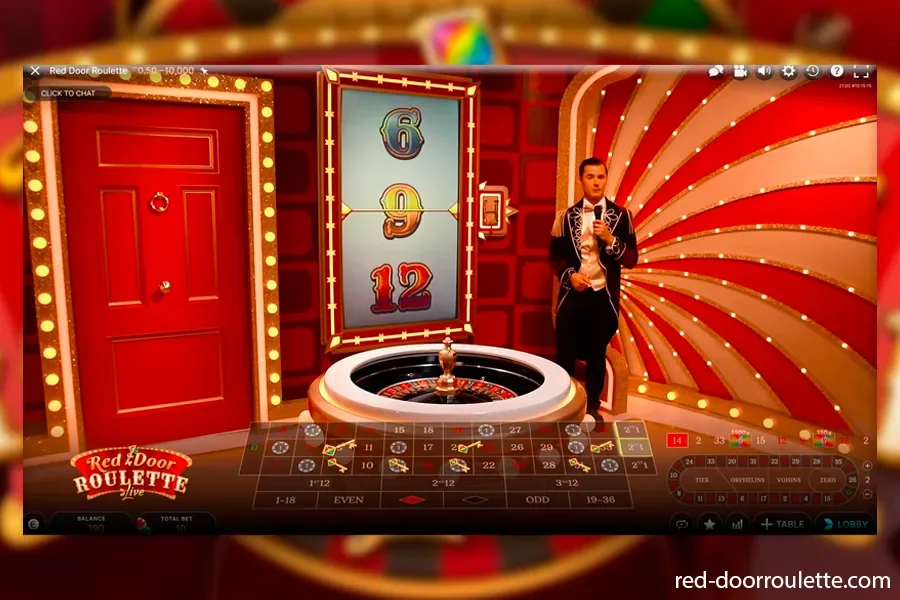
After choosing the chip denomination, place it on the required grid position. A straight-up chip covers one number, while group selections cover multiple numbers and outside bets use their own payout rules. The keyed feature is reserved for a qualifying straight-up selection, not every bet that happens to cover the winning pocket.
Recheck the total after Undo, Double or Repeat. Ten chips worth 1 unit each expose 10 units, even though the chip selector continues to display 1. The unit value of the next chip and the aggregate amount already at risk are different figures.


3. Wait for the key assignment
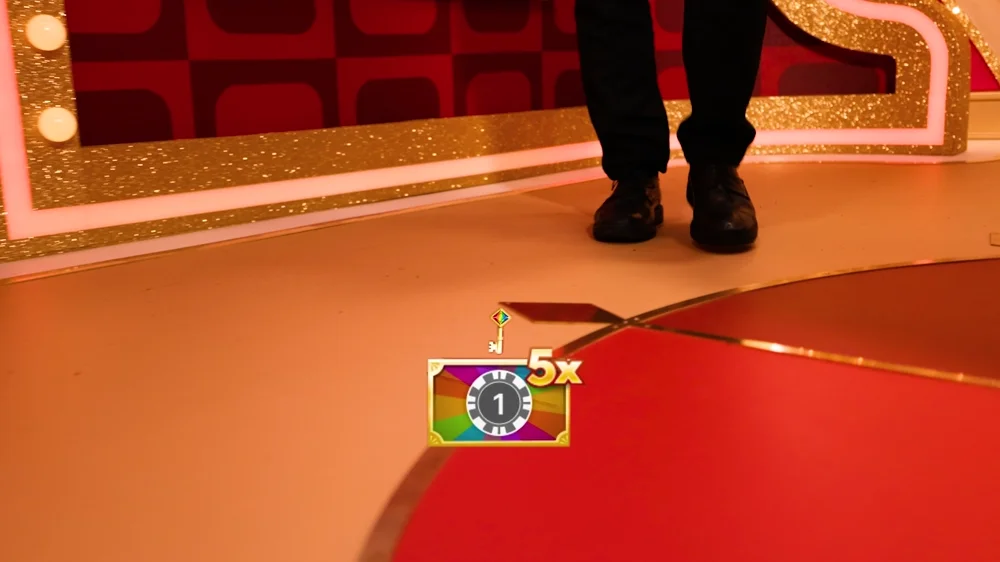
The roulette sequence begins once betting closes, and the presenter activates the reveal assigning 3–15 keys. Every key is attached to a different number for that round. A 2x–20x modifier may also be assigned, changing the relevant values used by the later feature.
The reveal marks numbers that can qualify; it does not permit moving an already accepted chip onto a newly keyed pocket. Use the finished key display to read eligibility rather than a temporary frame partway through the animation.
4. Match the pocket to the actual bet
After the ball comes to rest, assess the winning number against each of your selections individually. The basic straight-up payout is 19:1. For example, a winning chip worth 2 units produces 38 units of profit and returns the original 2-unit stake. That makes 40 units in total return before any feature is applied.
A winning colour or other covering bet does not automatically enter the feature. The entitlement is determined by the precise layout accepted before betting ended, including the qualifying straight-up selection.
5. Let a qualifying bonus finish
When your qualifying straight-up number both carries a key and wins, play continues through the red door. The feature’s wheel has 64 segments containing multipliers. A modifier scales its values, while a DOUBLE event raises them and causes another spin before the final outcome is resolved.
Let the entire feature finish before treating a displayed multiplier as settled. Bonus sequences can last longer than ordinary number results. Reconcile the account using the operator’s final transaction record rather than the first value that appeared during the animation.
6. Resolve interruptions without duplicating bets
If the stream stops, allow the accepted round to finish and inspect personal history. Repeated presses after reconnecting can place another wager in a later round. They do not repair the original bet or establish that it had failed while the video was unavailable.
Keep the selected positions, event time and round identifier when reporting a discrepancy. A public feed may help identify the approximate event, but it cannot establish the accepted instructions on a private account. Support needs the account’s own evidence to investigate settlement.


Use the chip denomination and layout together
The chip selector establishes a denomination, not the number of positions to be covered. After placing chips, compare the displayed total with the planned budget for the round. Repeat often restores the previous complete layout and Double may raise every active chip. Read the action shown by the current interface before confirming it.
A check that catches common mistakes
Count distinct positions as well as the amount placed on each. Two chips on one number raise that number’s stake; they do not cover two pockets. A chip placed on a border may be a group bet instead of a straight-up selection. Its precise location therefore affects both ordinary payment and eligibility for the Red Door feature.
Read payout notation before comparing selections
The standard payouts below are written as profit relative to stake. A winning corner at 8:1 credits 9 units from a 1-unit stake because the original unit is returned; a losing corner credits zero. Gross return includes any returned stake, whereas the net round result deducts every stake placed in that round.
For a mixed layout, do not collapse the ordinary bet categories into one generic multiplier. Work out the return for each winning eligible selection, add the credits and then subtract the entire layout cost. Any feature payment must follow the specific table’s rules; the Red Door bonus guide explains that separate sequence.
Keep the evidence needed for a settlement question
Keep the accepted layout and final transaction alongside the table title, account currency and round reference. A timestamp taken only from the video may not identify settlement clearly, because stream latency and account processing can differ. The public results history can provide context for an investigation, but it does not contain your private record of the accepted wager.
If a credited amount differs from your estimate, review the 19:1 ordinary payout, the losing chips elsewhere and any applicable win cap first. Also check the convention used by a source multiplier; it may not treat the original stake in the same way as the account statement.
Ordinary bet payouts
| Bet | Numbers covered | Profit payout |
|---|---|---|
| Straight-up | 1 | 19:1 |
| Split | 2 | 17:1 |
| Street | 3 | 11:1 |
| Corner | 4 | 8:1 |
| Six line | 6 | 5:1 |
| Dozen | 12 | 2:1 |
| Column | 12 | 2:1 |
| Red / black | 18 | 1:1 |
| Odd / even | 18 | 1:1 |
| Low / high | 18 | 1:1 |
The table lists ordinary payments before any qualifying feature is applied. Bonus entry remains limited to the eligible straight-up bet on the winning keyed number.
THE PRACTICAL DESK
Put the numbers to work
Change the example inputs to see how the arithmetic changes. These tools use the figures you enter; they do not read your casino account or predict a game result.
Round balance
Follow the mechanic into another game
Gold Vault Roulette and MONOPOLY Roulette also build special features around a single-zero wheel. Their enhancement and qualification rules differ, so transfer neither the payout nor the eligibility rule from one table to another.


Questions and answers
Can I bet after seeing the keys?
Key assignment takes place after betting has closed. Use the table’s accepted-bet indicator to establish which selections were in place before that deadline.
Does a split qualify for the bonus?
Winning with a covering selection does not, by itself, qualify for the bonus. The required route is the corresponding accepted straight-up bet.
What should I check after a frozen stream?
Check personal round history and settlement before repeating any selection.
EVOLUTION GAMES GUIDE