Lightning Storm
Lightning Storm results today and yesterday
Use the Lightning Storm history as a dataset: choose the table, time window and record category first. Read the update status before interpreting a gap or an unusually large factor. Account profit requires accepted stakes and credited returns in addition to these public records.
The dashboard displays rounds released by its results source. Read the history as a time-bounded dataset with limitations. It is neither a live statement of your casino account nor a mechanism for predicting the next outcome.

Latest records
These records come from a third party, not Evolution’s official feed. The supplied categories and factors can contain delays or gaps, and a recorded multiplier alone does not prove a personal payout.
Day boundaries follow the chosen time zone and the timestamps supplied with the records. The available records may cover only part of a calendar day.
Loading records…
— · All outcomes
Loading records…
Records supplied by LiveCasinoData under CC BY 4.0 come from a third party, rather than an official Evolution results service. We retain the source’s categories and factors; missing records and reporting delays may occur. A multiplier in this dataset cannot confirm the amount paid to an individual account.
Largest multipliers in this filtered sample
This ranking compares only source records currently loaded. It does not establish an all-time record or the cash winnings of a particular player.
Period
Loading records…
Records—
Bonus flag rate—
Mean recorded multiplier—
Largest recorded multiplier—
Time window
—
Bonus flag rate—
Records since last appearance—
Largest recorded multiplier—
Mean recorded multiplier—
Loaded records only. The selected window may not be fully covered.
Explore the history
Loaded records only. The selected window may not be fully covered.
Historical staking model
This is an illustrative replay: a matching result receives the fixed gross factor you entered, or the source multiplier treated as an assumed gross return. Every nonmatching record loses the stake. The model does not reproduce an individual casino settlement, card-line result or participant’s bonus choices.
Ending balance—
Net change—
Largest stake—
Maximum drawdown—
Total staked—
| Staking rule | Ending balance | Net change | Largest stake | Maximum drawdown | Records |
|---|
Outcome distribution
Multiplier ranges
Records since last appearance
Bonus flags by block
Multiplier heatmap
Latest 500 loaded records at most.
Outcome distribution · 30 d
| Outcome | Count | Observed share |
|---|
Records supplied by LiveCasinoData under CC BY 4.0 come from a third party, rather than an official Evolution results service. We retain the source’s categories and factors; missing records and reporting delays may occur. A multiplier in this dataset cannot confirm the amount paid to an individual account.
Guide sections
Find today’s and yesterday’s records
Set Today, Yesterday or a chosen calendar date, then select the timezone. Asia/Kolkata supplies IST for India; Europe/Rome follows daylight-saving changes for Italy. A calendar date runs from local midnight, which is a different boundary from a moving window covering the most recent 24 hours.
The first request supplies at most 500 records. Load selected day requests older pages until the browser’s 10,000-record limit, with the loaded interval shown throughout. A short archive, absent rows or delayed source can leave the day incomplete. Dates are those attached to source records, not independently confirmed physical spin times.
What one history row contains
Published rows may include an outcome name, reported factor, bonus indicator and source time. Together they describe the event supplied by the feed. They need not preserve every numbered position, intermediate animation or choice made by an individual participant during the round.
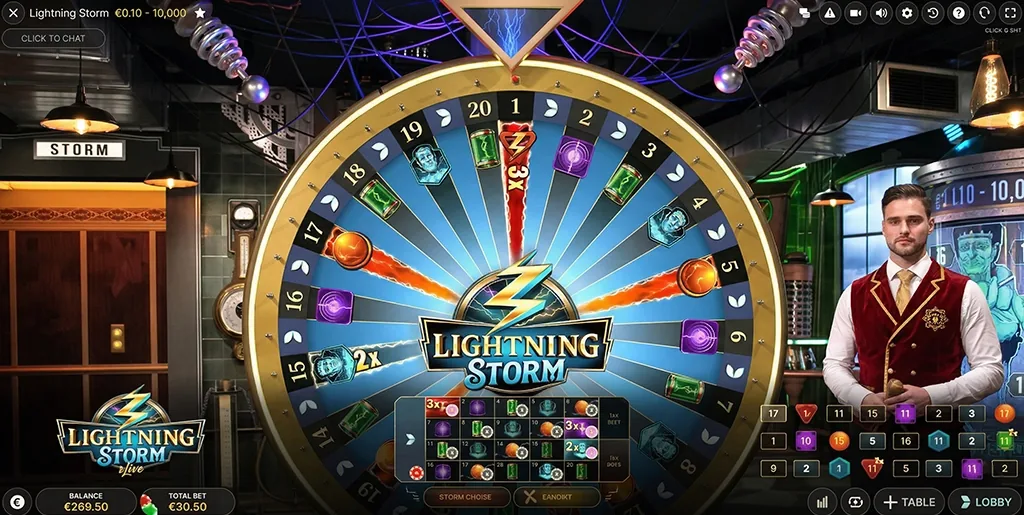
That limitation is particularly relevant to Hot Spot’s selectable tiles and the three Lightning Storm strikes. One public value cannot automatically represent the credit received by every participant who made a different choice.


Three times can refer to different things
Keep three timestamps distinct. The source assigns a time to its record, without independent verification here of the exact wheel-spin moment. Response-generation time concerns the returned data package. Last-check time concerns the browser’s request. None should be silently substituted for another when assessing how recent the information is.
When another browser check returns the same newest round, its source timestamp remains the same. A newly completed request is evidence of a new check, not necessarily of a newly recorded spin.
Read percentages with the sample count
Divide the number of matching records by the number eligible for the selected sample to obtain observed frequency. For instance, 6 matches among 120 records equal 5%.
Changing the date range or the records available changes that observed percentage. It is not the feature’s theoretical probability and does not suggest the next round should make up for a shortage seen earlier in the sample.
A maximum is not an average
A period’s highest multiplier describes a single observed record. Its mean, median and number of outcomes describe other aspects of the sample. One exceptional entry can dominate a short window, making it look unlike the figures calculated over a longer period.
Use matching definitions when comparing periods, and confirm whether the requested interval was fully supplied. Repeating an existing value or inventing simulated records to fill holes would change the dataset rather than repair its coverage.
Handle delays and empty states honestly
During a temporary source failure, previously received rows should retain an explicit indication of their age. A successful but empty response means that request returned no records. It does not establish that the game itself produced no rounds during the period.
After a delay, retry and examine the most recent available source timestamp. A failure to receive data is different from counting zero matching outcomes within a demonstrably complete sample.



Use the data for description
Use the history to recognise feature names, examine an event sequence and compare recorded samples. It cannot establish the balance of a personal account or disclose every game decision that the feed leaves out.
Questions about payments or individual settlements belong with the operator’s transaction and round history. For an explanation of the gameplay, match the feed’s outcome label to the relevant rules or bonus section instead.
Big wins, last bonuses and tracker comparisons
Choose the highest-multiplier view to inspect the largest supplied factors within the active date filter, or restrict the display to bonus rows. The top-ten panel uses the same filtered records. An entry of 6,000× reports a factor; it does not demonstrate a 6,000-fold payment on every chip a player placed that round.
Before comparing trackers, align their table, timezone, period and definition of a multiplier. A missing event may reflect delayed ingestion or coverage of another table. Gap cards count loaded rows since the latest match and display its source timestamp. If none matches, the sample contains no earlier occurrence; it does not establish an infinite wait.
THE PRACTICAL DESK
Put the numbers to work
Change the example inputs to see how the arithmetic changes. These tools use the figures you enter; they do not read your casino account or predict a game result.
Sample frequency
Questions and answers
Why does the page update without a new round?
A request can succeed while returning the same newest event. To establish that a newer record arrived, compare the source timestamps of the records themselves.
Are these percentages theoretical odds?
No. They are observed shares of the records available in the selected sample.
Can I calculate every player’s profit from this feed?
No. Public fields can omit the total stakes, selected tile or strike and settlement terms required to calculate one participant’s profit.
What does an empty history mean?
It indicates that no usable records came back for the request. It is not evidence, by itself, that the game was inactive.
Why can today’s results differ between two trackers?
Align the table, timezone, calendar boundary and loaded date range first. Different coverage or a delay in publication can explain differences in the histories shown.
Is the highest multiplier an all-time biggest win?
No. It is the maximum supplied factor within the loaded, filtered records. It neither verifies a player’s cash payment nor establishes a record covering all time.
EVOLUTION GAMES GUIDE