Evolution · MONOPOLY Big Baller
A practical Monopoly Big Baller strategy
Put a MONOPOLY Big Baller staking idea through an accounting check before looking at a result chart. Specify the full cost of a round, the amount exposed over a session and the stopping point. A budget model can answer those questions even when the next outcome remains unknown.
A session plan can control which selections are bought and how much is committed. It cannot use earlier balls or an extended bonus gap to reveal the contents of the next draw in advance.

Guide sections
Use a turnover ledger
Keep gross stakes and credited returns in separate columns to make a session understandable. Ten rounds funded at 5 units each create 50 units of turnover even if some winning credits are reused. If those rounds return 42 units altogether, their combined net result is a loss of 8 units.
Record each bonus stake independently too. A large factor applies to the selection that qualified, not by default to every stake in the round. The ledger below makes that distinction visible using illustrative outcomes without assigning them a predicted probability.
| Example plan | Total stake over ten rounds | If total credits are 42 |
|---|---|---|
| 3 units per round | 30 units | Net +12 units |
| 5 units per round | 50 units | Net −8 units |
| 8 units per round | 80 units | Net −38 units |
Define the round before choosing the cards
Choose a fixed round cap, then allocate that amount between regular cards and bonus positions. This makes the full commitment visible. A chip with a small denomination does not constitute a small combined bet when it has been placed on numerous selections.
With an illustrative 6-unit ceiling, two cards priced at 2 units each and two bonus bets at 1 unit each consume the full budget. Four cards at 2 units plus those same bonuses would cost 10 units. The screen may look only a little busier, yet the exposure per round has risen by 67%. This comparison explains cost and does not recommend either distribution.
Choose a card for its mechanism, not a prediction
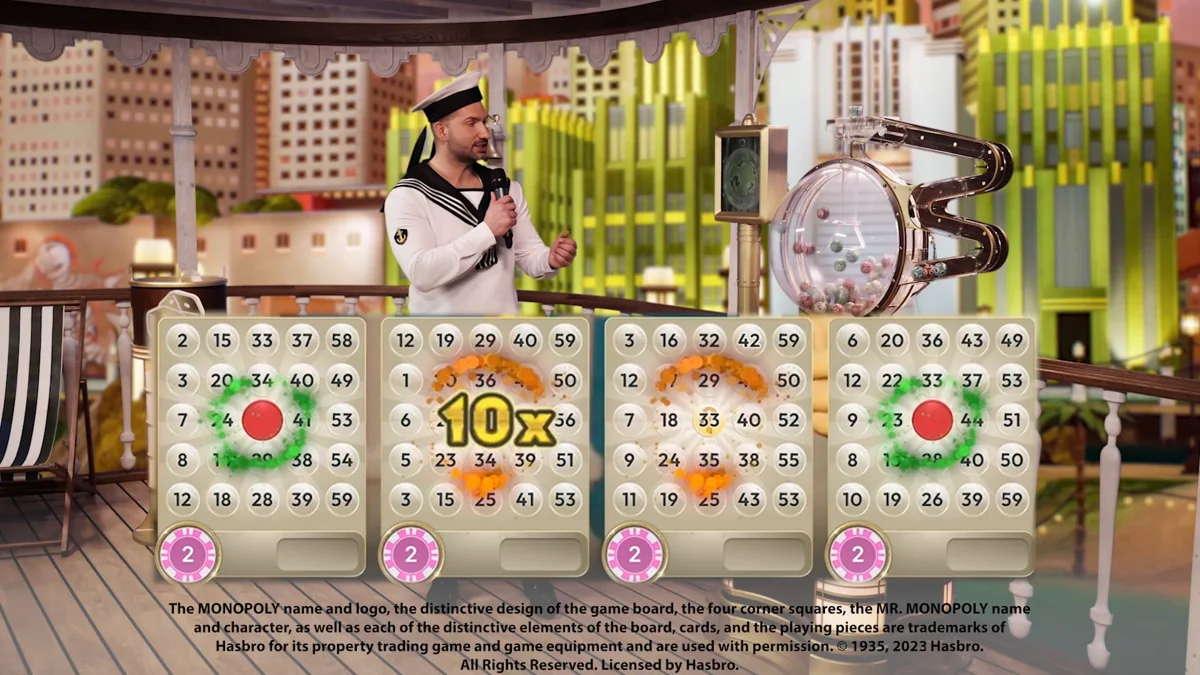
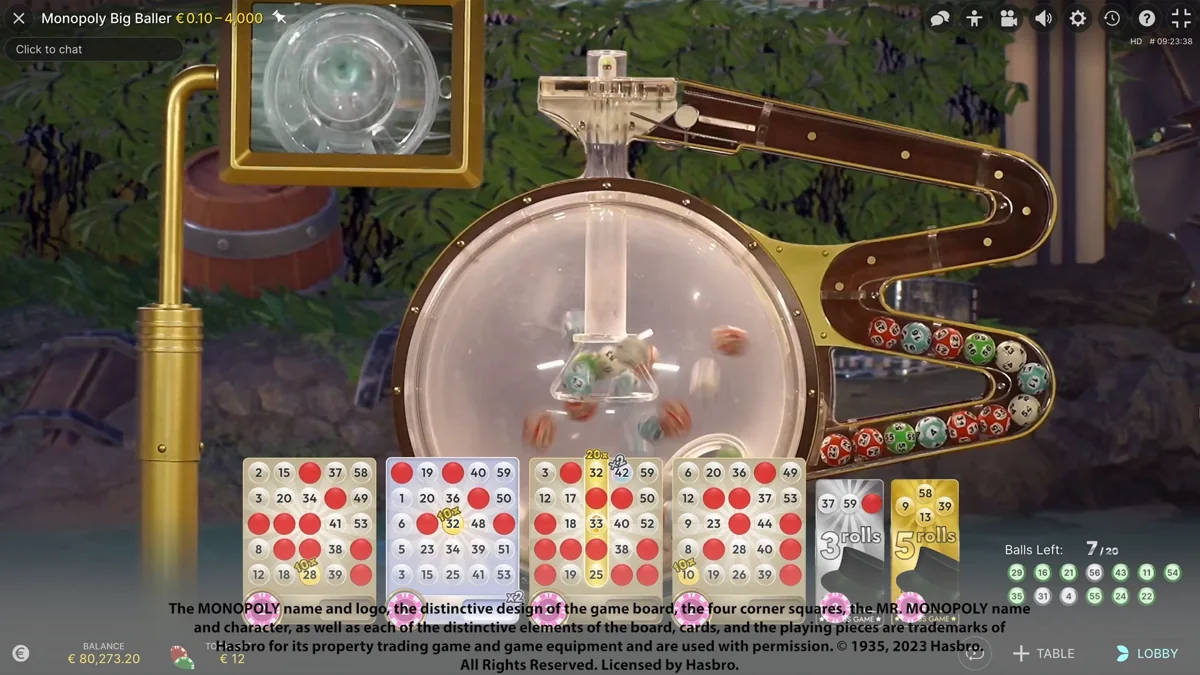
Free Space supplies a covered centre that can contribute to a completed line without its matching ball being drawn. Chance instead begins with a centre factor that can improve the return when the required conditions are satisfied. The choice changes both the route toward a line and the return associated with a qualifying line.
A Chance card that lost previously does not make a later one due to win. Numbers are allocated for each round; past results are not a list of numbers that can be forced onto the next card. Make any switch between types as part of an advance plan, rather than as an attempt to reverse one particular loss.
Avoid escalating after a loss
Repeatedly doubling after a loss changes a 1-unit starting stake into 1, 2, 4, 8, 16 and 32 units. Losing all six attempts costs 63 units. With multiple cards and bonus positions active, Double can expand the entire purchased layout, not merely one part of it.
Even a round containing a winner can return less than the losses already accumulated. Finite funds, table caps, card modifiers and bonus-entry requirements prevent a simple progression from guaranteeing recovery. Establish the spending ceiling and stopping time before play, and do not rewrite those limits while a losing sequence is underway.
Read history as a description of a sample
For a rate of rounds containing a bonus, divide bonus-bearing rounds by all eligible completed rounds in the loaded sample. A single main round can contain both features. Decide first whether you are counting rounds or individual bonus events, then use a denominator consistent with that definition.
A gap counts recorded rounds since the last event; it is not a countdown to a compulsory return. Duplicates, missing entries, day boundaries and delayed settlements can alter a small sample. Even a complete, clean log only describes past play and does not confer an advantage on a new independent draw.
Know what the published RTP does and does not say
The documented optimal theoretical RTP is 96.10%, corresponding to a 3.90% house edge under the stated assumptions. Applying that edge to 100 units of turnover gives a theoretical long-run retention of 3.90 units. It does not predict that this particular 100-unit session will finish with precisely that loss.
Short sessions can vary far more than the theoretical average suggests. If your purpose is to learn the controls, a recording may be sufficient. Stop if you begin borrowing, concealing time spent or increasing stakes to undo a loss. A useful limit remains in force even immediately after a disappointing result.
Session budget calculator
Include the price of every Big Baller card purchased for the draw. Add separately staked bonus positions before calculating how many funded rounds the session budget can support.
Total stake per round—
Planned turnover—
Full rounds covered by budget—
Budget after planned stakes, before returns—
Enter positive amounts and whole numbers for selections and rounds.
The calculator measures card expenditure before any return is assumed. Receiving a free space changes the card’s state, not the price already paid for the round.
Official game information
Evolution · MONOPOLY Big BallerKnow the game? Try the table
Review the available ways to access the game, then check the limits shown at the selected table before beginning a session.
Play Now 18+ · Eligibility and operator terms apply.
THE PRACTICAL DESK
Put the numbers to work
Change the example inputs to see how the arithmetic changes. These tools use the figures you enter; they do not read your casino account or predict a game result.
Round balance
Follow the mechanic into another game
MONOPOLY Roulette and Mega Ball separate two parts of Big Baller’s appeal: board movement and numbered-ball matching. Follow the accepted selection and total round cost in each format.


Questions and answers
Can hot or cold numbers predict the next draw?
A historical frequency summarises earlier recorded draws. It cannot identify a number that is required to appear, or required to stay absent, in the next independent round.
Does buying four cards guarantee a line?
No. Buying additional cards increases both the number of paid selections and the overall stake. It still does not guarantee that any card will complete a line.
Can a progression remove the house edge?
No. A change in stake alters financial exposure and the possible size of losses. It leaves the underlying game rules unchanged.
Why is a bonus-gap count sometimes different on two trackers?
The trackers may use different windows, incomplete records or category definitions, or one may count bonus events while another counts main rounds. Align those definitions before comparing their percentages.
EVOLUTION GAMES GUIDE