Evolution · Rules and results
Crazy Time: the complete wheel-to-bonus guide
How does Crazy Time turn a wager into a completed round? Start with its event sequence, then compare the feature rules, the recorded history and the account conditions. The sections below connect those three parts without treating a promotional image as a complete rulebook.
Four bonus games sit behind a single 54-segment wheel, but each takes a round in a different direction. Crazy Time offers eight selections: 1, 2, 5, 10, Coin Flip, Cash Hunt, Pachinko and the title feature. Use this guide to connect a recorded wheel result with Top Slot, the bonus sequence and the bet that qualified. The results dashboard is a useful starting point; the rules explain what its labels actually mean.
54wheel segments
8bet selections
4bonus games
Evolutiongame provider
Loading records…
Records supplied by LiveCasinoData under CC BY 4.0 come from a third party, rather than an official Evolution results service. We retain the source’s categories and factors; missing records and reporting delays may occur. A multiplier in this dataset cannot confirm the amount paid to an individual account.
Guide sections
Evolution · Crazy Time
Recorded preview
The preview is recorded; it is not a live broadcast or a playable casino table.
Crazy Time RTP by bet: use the actual rules
Sisal’s published Italian rules give the theoretical returns listed below, ranging from 94.33% to 96.08%. Pachinko supplies the lower endpoint. Evolution’s brief overview instead quotes 94.41%–96.08% and does not include that lower entry. When assessing a specific table, use its detailed version of the rules rather than applying the shorter headline range to every bet.
| Bet | Theoretical RTP | House margin |
|---|---|---|
| 1 | 96.08% | 3.92% |
| 2 | 95.95% | 4.05% |
| 5 | 95.78% | 4.22% |
| 10 | 95.73% | 4.27% |
| Coin Flip | 95.70% | 4.30% |
| Cash Hunt | 95.27% | 4.73% |
| Pachinko | 94.33% | 5.67% |
| Crazy Time | 94.41% | 5.59% |
Subtract RTP from 100% to obtain the house margin. On Pachinko, 100 model units of turnover correspond to a theoretical long-run shortfall of 5.67 units. That calculation does not forecast the outcome of 100 spins or a player’s deposit. RTP, hit frequency and the multiplier awarded in a bonus are separate measurements.
One wheel, eight selections, several kinds of result
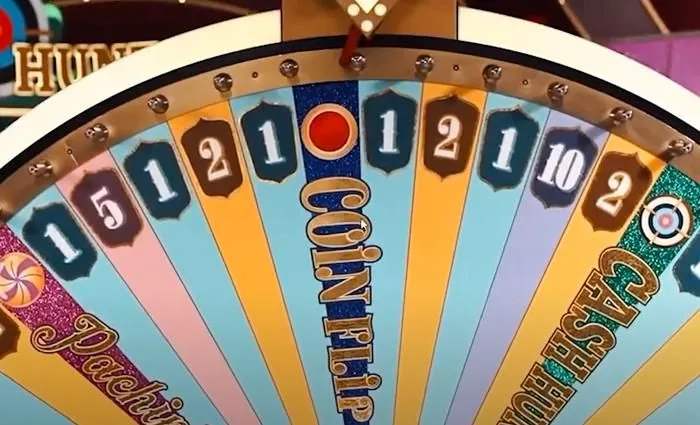
Before betting closes, choose which of the eight outcomes your stake will cover. The 54-segment wheel contains the numbers 1, 2, 5 and 10 alongside Coin Flip, Cash Hunt, Pachinko and Crazy Time symbols. You may cover more than one outcome, but every additional chip is another part of the round’s total stake; selecting several positions does not turn them into a single bet.
Read the outcome and multiplier as two connected pieces of information. The main wheel first selects the winning position. If that position is a bonus symbol, play continues into the relevant feature, where another result can be generated. The history may therefore show a feature name and a later multiplier, but these fields still do not replace the operator’s account statement.
Released by Evolution in July 2020, the game brings a live wheel, Top Slot and four distinct bonus formats into one show. Although one feature uses a slot-style presentation, the product as a whole is not a conventional reel slot.
Read a round from betting to settlement
Before the wheel result
Set the chip denomination first, then add up the amounts on every selected position. Above the main wheel, Top Slot can attach a multiplier to one selection. That boost takes effect only if the wheel subsequently selects the same position. A prominent figure in the Top Slot display is therefore a conditional opportunity within the round, not a payment on its own.
After the wheel result
When a number wins, its paytable determines settlement. When a bonus symbol wins, qualifying wagers move into that feature. Wait for the feature to finish before reconciling its multiplier with the account record. Check that the stake, selected position and completed sequence all belong to the same round and transaction.
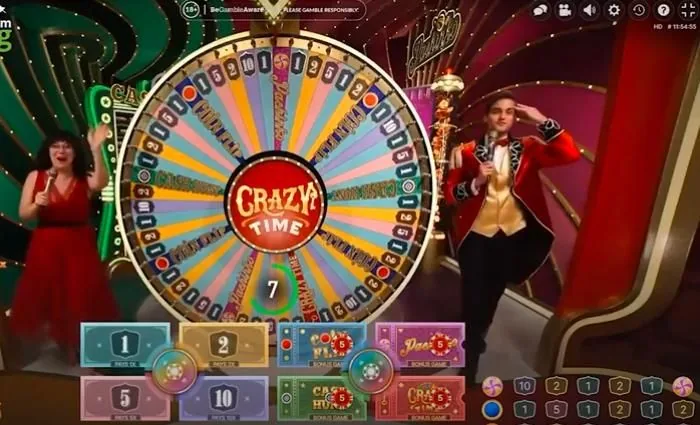
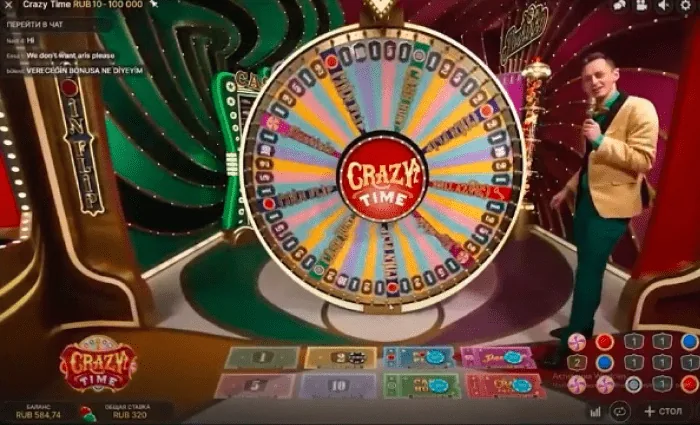
What Top Slot changes—and what it does not
Evolution’s description puts the Top Slot multiplier ceiling at 50x. To use that multiplier, the position selected by Top Slot must also win on the main wheel. A matching bonus position carries the calculation into another stage, so the sequence is not complete until the bonus game has resolved.
Identify each figure’s role before attempting a calculation. It might name a wheel position, express the Top Slot boost or describe the final bonus reward. Multiplying all visible numbers together can therefore produce the wrong answer. Likewise, a field named multiplier in the API does not identify its settlement stage by itself. The dashboard retains that source value separately from its illustrative bankroll model.
The figures above come from Evolution’s global game overview. A local edition may use different settings, so play is governed by the help screen and paytable of the table actually opened.
Four bonuses with different decisions
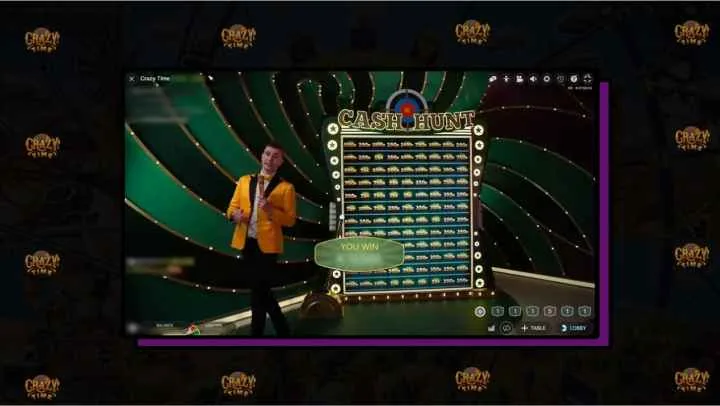
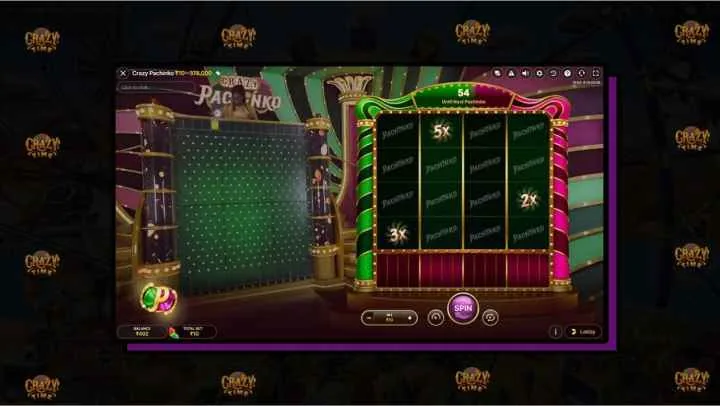
Each bonus resolves through a different mechanism. Coin Flip chooses between two coloured sides. Cash Hunt hides multiplier targets in a grid and includes a selection for the participating player. Pachinko follows a falling puck through pegs into a reward zone. In the title bonus, a large wheel works with three coloured flappers. These are four distinct sequences, not alternative labels for one generic multiplier draw.
Player-choice features can settle differently for participants in the same event. The single multiplier published by a public feed may be a representative value or a result defined by the data provider; it cannot necessarily describe every participant’s choices. For an actual wager, reconcile the outcome using the casino operator’s own round history.
The wheel gives probabilities, not a timetable
The wheel’s 54 positions are distributed unevenly. Number 1 appears on 21 segments, number 2 on 13, number 5 on 7 and number 10 on 4. For bonuses, Coin Flip takes 4 segments, Cash Hunt and Pachinko take 2 each, and Crazy Time takes 1. Adding those bonus positions gives 9 out of 54, which is one sixth of the complete wheel.
An observed frequency answers what occurred in a particular sample. A probability describes an outcome under a model. Keep those ideas apart when comparing a session with the wheel layout: even a lengthy absence of one symbol does not schedule it for the following spin or make it due.

What today’s results can tell you
Outcome, multiplier, bonus status and timestamp are the main fields supplied by the public feed. The dashboard uses them to count entries, group outcomes, identify the latest published record and compare the distribution within a chosen sample. Those records do not reveal a player’s stake allocation or every choice made during Cash Hunt and the title bonus.
There are two clocks to inspect: the newest round timestamp provided by the source, and the last successful request made by the page. A fresh request can still return old upstream data. During an outage, previously received entries should remain visible with their age clearly identified, rather than being presented as newly completed rounds.
A useful way to inspect the history
- Choose a time window or a fixed number of recorded rounds.
- Read the actual number of entries included in the calculation.
- Compare numbered selections and bonus events separately.
- Look at the timestamp of an unusual multiplier before drawing conclusions.
- Keep the same sample when comparing two staking assumptions.
Two time windows can contain many of the same rounds. A ten-minute view and a thirty-minute view are therefore not independent experiments. Before interpreting a change between them, also check whether record gaps, publication delays or a different sample size could explain the apparent shift.
Historical replay is an explanation, not a forecast
A fixed-stake replay tests a narrowly defined proposition: applying a stated stake and settlement rule to the supplied records. Progressions test a different proposition because wins and losses alter the next amount exposed. For a fair comparison, keep the initial bankroll, the historical sample and the stopping rules identical across the models.
The multiplier in a public feed should not be read as a player’s net profit. Several settlement stages and player-specific bonus outcomes can be involved. Any assumed return convention used by a replay needs to be stated visibly. A balance curve derived from incomplete settlement information cannot establish that a staking system is profitable.
Watch the game before choosing an access route
Distinguish three ways of observing or practising the game. A recorded rules video explains screens without placing wagers. A live spectator stream shows the studio as it runs but may offer no free betting at all. A virtual-credit demo is different again: it must identify its simulated funds and make clear that its results are not settled for real money.
Use the phone orientation you intend to play in and inspect the chip selector, aggregate stake, history and rules for readability. Learning the mechanics does not require an unknown APK. If a casino supplies an app, obtain that application through the operator’s verified distribution channel instead of trusting an unrelated download page.
Compare the account as well as the game
A familiar game name does not confirm that a casino can accept a particular player. Establish the exact operator, its jurisdiction, the applicable eligibility conditions and its current catalogue before registering. Neither a search listing nor an old screenshot proves that the same table can be opened by that account today.
Read an operator’s promotion separately from the game’s bonus rules. Pachinko is a feature inside the game; a welcome offer is an account arrangement. Before calculating a promotion’s cost, check the turnover base, contribution from live games, qualifying stake ceiling and expiry. Deposit and withdrawal rules likewise belong to the casino account rather than the wheel.
Build a routine that keeps the figures readable
Set both a spending limit and a duration before placing a wager. Count all the selections in a round instead of focusing on the smallest chip. Four selections carrying one unit each expose four units in total. Even if one wins, its return must be compared with the full four-unit cost to establish the round’s net result.
Use the rules pages for mechanics, the results page for published history and the strategy page for testing assumptions. These tools do not alter the next wheel outcome. When gambling affects everyday obligations, money or time, make use of account limits, a break or independent support rather than relying on historical charts to justify continued play.
A round-budget example you can check yourself
Consider a paper example with 2 units on number 1, plus 1 unit on Coin Flip and 1 on Cash Hunt. All selections together expose 4 units. A later account record showing 6 units returned gives a +2-unit net result; a return of 2 units gives −2 units, even if one position won. These calculations use the account’s returned amounts and do not assume a settlement meaning for the API multiplier.
A balance may decline even when winning selections occur often, because a winning spot can cover only a portion of the money spread across several wagers. Equally, a single infrequent bonus may heavily influence a small sample. Follow the step-by-step guide for the round sequence, the bonus guide for individual features and the results dashboard for public data distinguished from your account calculations.
THE PRACTICAL DESK
Put the numbers to work
Change the example inputs to see how the arithmetic changes. These tools use the figures you enter; they do not read your casino account or predict a game result.
Round balance
Spending plan
Follow the mechanic into another game
Dream Catcher isolates the continuing wheel sequence; Crazy Coin Flip turns qualification and Top-Up into a separate slot-to-studio journey. Compare how a wager enters and leaves each round.



EVOLUTION / NEWSROOM
From the provider’s newsroom
A real capture of Evolution’s announcement. The announcement describes this release and its market; it does not establish access for every account.
Read the original announcement ↗Know the game? Try the table
Open the available play options and review the table limits before you start.
Play Now 18+ · Eligibility and operator terms apply.
Questions and answers
Is Crazy Time a slot?
The main game is a live show using a wheel with 54 segments. Although Top Slot is one of its features, that element does not turn the complete game into a conventional reel slot.
How many bonus games are there?
There are four distinct bonuses: Coin Flip, Cash Hunt, Pachinko and Crazy Time. Each has its own mechanism and, where applicable, player decisions.
Does a long bonus gap predict the next spin?
No. A gap is a measurement of earlier rounds. It neither guarantees an upcoming bonus nor puts the next appearance on a timetable.
Are API multipliers my winnings?
No. Public records do not include your stakes, all selected positions or every personal bonus decision. Actual winnings must be checked in the operator’s settlement history.
Is 96.08% the RTP of every bet?
No. The selected bet affects the theoretical return. The published bet-specific figures span 94.33%–96.08%.
EVOLUTION GAMES GUIDE