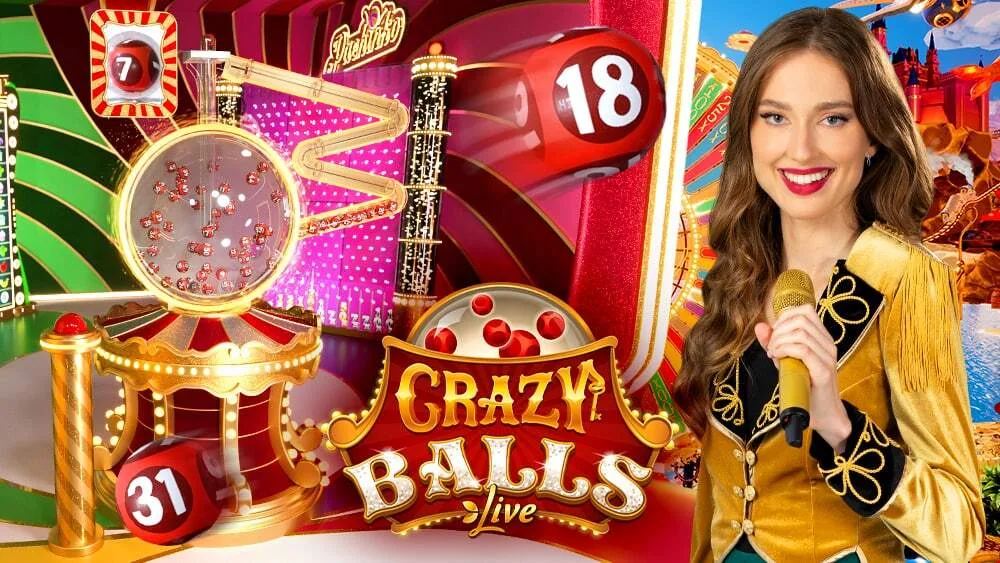
Crazy Balls
Inside the four Crazy Balls bonus features
A Crazy Balls feature has an entry condition, a resolution sequence and a settlement. Keep those stages together when comparing bonuses. The practical examples below help distinguish the shared studio event from the outcome credited to an individual wager.
All four features begin from the Crazy Balls draw, but their paths to a final value are different. Some resolve a shared event, while others branch according to a player’s chosen target or flapper. Follow each feature from qualification to completion before interpreting its factor, especially when a public record shows only one multiplier for the event.

Guide sections
Compare entry, choices and settlement across four features
Each feature has its own result mechanism. Coin Flip decides between red and blue; Cash Hunt places individual selections behind targets. In Pachinko a puck travels through the board. The Crazy Time feature instead combines a wheel with the participant’s selected flapper.
Compare each feature using three points: how entry is obtained, what the participant can choose and which value appears at resolution. A common feature name does not guarantee a common payment when targets or flappers create different branches. Keep deposit promotions in a separate comparison covering eligibility, turnover and expiry. Operator offers do not decide which card qualified for the game’s own bonus.
| Feature | Key distinction |
|---|---|
| Coin Flip | Red or blue coin outcome |
| Cash Hunt | 108 targets; individual choice |
| Pachinko | 16 landing zones; DOUBLE repeats |
| Crazy Time | 64 segments; 3 selectable flappers |
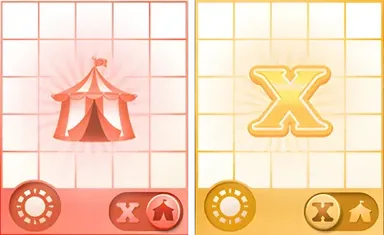
Coin Flip: identify the upward side and its factor
Coin Flip shows a red side and a blue side, each with its multiplier displayed before launch. The launcher flips the coin, and the upward-facing side at the finish determines the feature value. Read the shown side and its factor together when following the completed event.
Earlier flips do not reveal a target, and the colours are not required to alternate. A history row naming Coin Flip will not identify the finishing colour unless the source actually provides it. Even where the feature outcome is shared, a personal return still requires the qualifying stake and applicable settlement rules. The feature label alone is therefore not a complete payment calculation.


Cash Hunt: follow the participant’s own target
Interpret one target without generalising to all players
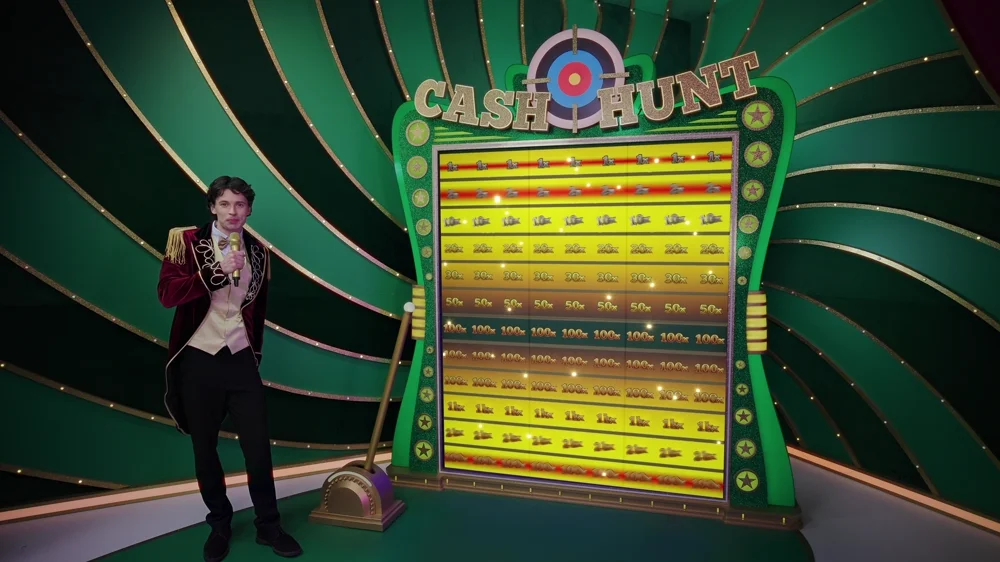
Cash Hunt initially displays 108 multipliers, then covers the positions with symbols and shuffles the targets. Before the countdown expires, each participant chooses a target. Revealing that selected position supplies the multiplier for that participant, so the choice is an essential part of the completed result.
A single public factor cannot reproduce all 108 positions or every participant’s decision. A screenshot of one successful target records that selection; it does not establish a repeatable route to the next large factor. Use a preview to find the countdown, recognise confirmation of the target and read the revealed value. Treat the decorative covering symbols as interface artwork rather than evidence that a particular hidden multiplier is waiting underneath.
Pachinko: separate each DOUBLE from the final landing
Pachinko ends at one of 16 landing zones showing either a multiplier or DOUBLE. The drop position is selected from positions 4–13. Landing on a multiplier resolves that stage, whereas DOUBLE increases the multiplier values twofold and sends the puck into another drop. Follow the bottom landing rather than stopping at an intermediate animation.
Extra drops can continue until a multiplier is reached or the 10,000x feature cap is reached. When examining a replay, identify the opening drop, each repeat and the final resolved value separately. The starting board is not the settled result. A cap marks an upper boundary in the rules; it does not state that a typical feature will reach that boundary.
Crazy Time: track the chosen flapper through repeats
The Crazy Time feature uses a 64-segment wheel with green, blue and yellow flappers. Players choose a flapper and receive the value beneath it when the wheel stops. A DOUBLE under a selected flapper keeps the relevant participants in the feature with doubled values and another spin. Track the selected flapper through the sequence rather than reading every visible value as one shared outcome.
The repeated-spin sequence can reach a maximum of 20,000x. Different flapper choices can take participants along different result branches within one feature. Reconstructing all three branches would need more detail than a public record with one multiplier supplies. For a question about your settlement, use the operator’s round history and recorded selection instead of a highlight that followed another player’s flapper.
Separate a feature ceiling from the sequence observed
Evolution’s description gives a ceiling of 20,000x for the Crazy Time feature and a 10,000x cap for Pachinko. Each maximum belongs to the rules of that particular feature.
In a walkthrough, describe what happened separately from the maximum allowed by the rules. Count repeated drops or spins, locate the resolved factor and only then discuss settlement. Verify the qualifying stake and any applicable monetary cap in the actual conditions. A striking factor alone neither establishes every participant’s payment nor tells you how frequently the feature reaches its ceiling during ordinary play.

Read casino promotions outside the game’s feature rules
Coin Flip, Cash Hunt, Pachinko and Crazy Time are built into the game. A casino’s welcome package, cashback or free-bet offer is a separate agreement. Read whether the promotion includes live games and this exact title, how qualifying turnover is calculated and whether a maximum stake limits participation. These account conditions should not be inferred from a game feature’s name.
Consider an illustrative offer with a fifty-unit bonus and a requirement of twenty times the bonus. On a bonus-only basis, that means one thousand units of turnover before considering contribution rates or other conditions. This is hypothetical arithmetic, not a current offer. A large maximum within a game feature does not prove that an operator promotion is valuable or straightforward to complete.
THE PRACTICAL DESK
Put the numbers to work
Change the example inputs to see how the arithmetic changes. These tools use the figures you enter; they do not read your casino account or predict a game result.
Round balance
Follow the mechanic into another game
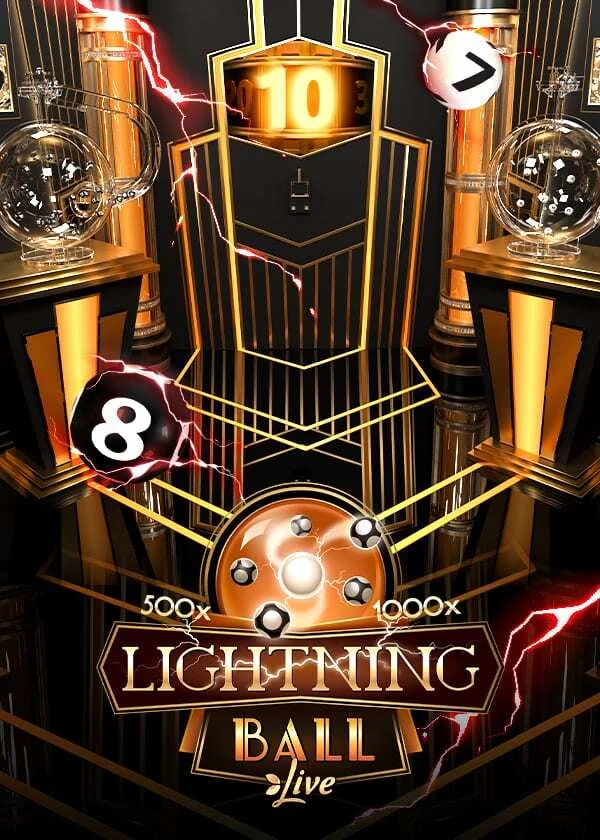
Mega Ball and Lightning Ball offer two useful comparisons for a numbered-ball game: card lines in one, standard numbers plus a separate Powerball in the other. Matching a number is only the first step in reading the payout.

Questions about the four bonus routes
What is the maximum Crazy Balls bonus multiplier?
The provider describes up to 20,000x in the Crazy Time feature and a 10,000x cap in Pachinko. They are feature limits, not typical outcomes or guaranteed account payments.
Why can Cash Hunt players receive different multipliers?
Each player selects one target from the covered layout, and that target reveals their multiplier. A lone public value therefore cannot describe every participant’s Cash Hunt result.
Are the game’s bonuses casino deposit offers?
No. The four named bonuses belong to the game itself. Deposit promotions are agreements with the operator and have separate eligibility rules and terms.
EVOLUTION GAMES GUIDE