Crazy Balls
Crazy Balls results today and yesterday
Use the Crazy Balls history as a dataset: choose the table, time window and record category first. Read the update status before interpreting a gap or an unusually large factor. Account profit requires accepted stakes and credited returns in addition to these public records.
Use this history to inspect the chronology and label counts of records received from an external source. It is neither the complete numbered draw nor a personal account statement. Read every value alongside its record timestamp and the sample currently selected, so that a recent-looking display does not conceal delayed or partial coverage.

Latest records
These are third-party observations rather than an official Evolution feed. Labels and factors are shown as received, with possible gaps or delays. A multiplier in this history does not verify an individual payment.
Day boundaries follow the chosen time zone and the timestamps supplied with the records. The available records may cover only part of a calendar day.
Loading records…
— · All outcomes
Loading records…
Records supplied by LiveCasinoData under CC BY 4.0 come from a third party, rather than an official Evolution results service. We retain the source’s categories and factors; missing records and reporting delays may occur. A multiplier in this dataset cannot confirm the amount paid to an individual account.
Largest multipliers in this filtered sample
This ranking compares only source records currently loaded. It does not establish an all-time record or the cash winnings of a particular player.
Period
Loading records…
Records—
Bonus flag rate—
Mean recorded multiplier—
Largest recorded multiplier—
Time window
—
Bonus flag rate—
Records since last appearance—
Largest recorded multiplier—
Mean recorded multiplier—
Loaded records only. The selected window may not be fully covered.
Explore the history
Loaded records only. The selected window may not be fully covered.
Historical staking model
The replay is an illustration based on assumed gross returns. A matching entry receives either your fixed gross factor or the supplied multiplier; every non-matching entry loses the stake. It does not recreate a player’s card lines, bonus decisions or actual casino settlement, so its output must remain distinct from an account history.
Ending balance—
Net change—
Largest stake—
Maximum drawdown—
Total staked—
| Staking rule | Ending balance | Net change | Largest stake | Maximum drawdown | Records |
|---|
Outcome distribution
Multiplier ranges
Records since last appearance
Bonus flags by block
Multiplier heatmap
Latest 500 loaded records at most.
Outcome distribution · 30 d
| Outcome | Count | Observed share |
|---|
Records supplied by LiveCasinoData under CC BY 4.0 come from a third party, rather than an official Evolution results service. We retain the source’s categories and factors; missing records and reporting delays may occur. A multiplier in this dataset cannot confirm the amount paid to an individual account.
Guide sections
Set a calendar date and the correct time zone
Set both the date and time zone: select Today, Yesterday or a calendar date, then choose the applicable zone. Asia/Kolkata (IST) serves India, while Europe/Rome follows Italian daylight-saving changes. A calendar date starts at midnight in the chosen zone. It therefore covers a different interval from the most recent rolling 24 hours.
The first response includes no more than 500 records. Load selected day requests older pages, subject to the browser’s 10,000-record ceiling, while the loaded interval stays visible. Even then, missing entries, a delayed feed or limited archive depth can leave part of the requested day uncovered. These dates are source-record timestamps and should not be presented as independently verified times of physical game events.
Read one complete source row
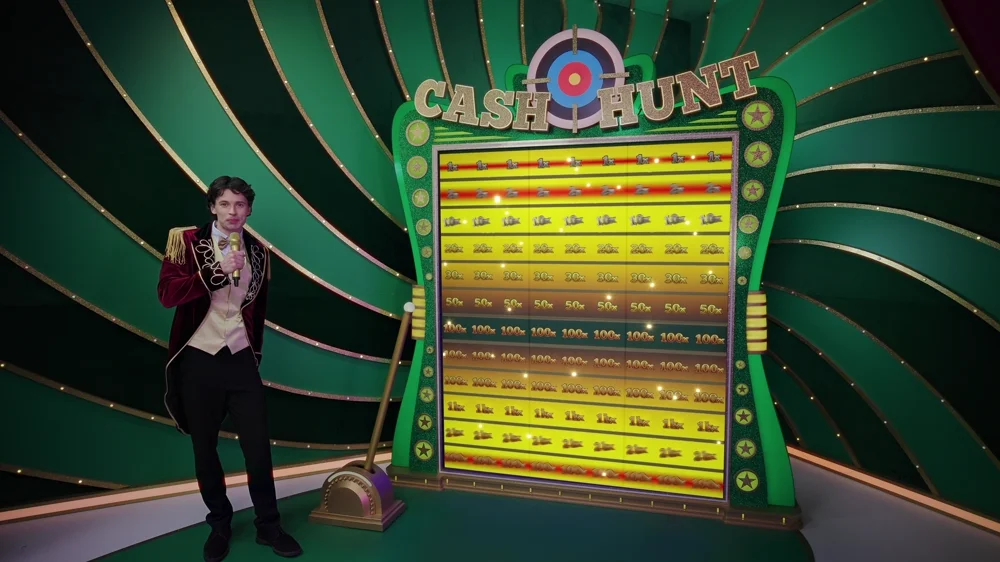
Inspect a complete row before focusing on its biggest value. Each entry contains a result label, multiplier, bonus classification and created_at timestamp. Numbers in the Crazy Balls feed is one such category; it does not expand into all 20 drawn balls or reveal every player’s completed lines. Maintain that distinction when counting entries and when matching the public display to a session you watched or played.
The bonus filter narrows the list to entries tagged by the source. You can then examine their labels and sequence, but the tag cannot confirm that a particular player’s card qualified. To assess recency, compare the time of the successful request with the newest record timestamp. Neither establishes exact physical start or settlement timing for the whole draw. Accepted stakes must still be verified against the operator’s history.
| Field | Meaning |
|---|---|
| result | Source outcome label |
| multiplier | Value associated with the record |
| bonus | Source feature flag |
| created_at | Record timestamp |


What result, multiplier, bonus and created_at mean
Three fields describe the published observation: result gives a label such as Numbers or a feature name; multiplier gives the associated numeric factor; and bonus indicates the source’s feature classification. Read these together rather than assuming that any one field supplies all the details of the underlying round.
created_at dates the source record, not a proven physical spin. The row also lacks a player’s full card or Cash Hunt target. Leave missing information marked as unavailable. Replacing an absent value with zero would invent an outcome, which could then alter counts, factor averages and comparisons that incorrectly assume every field was actually observed by the source.
Distinguish a successful refresh from new data
Keep stale entries clearly identified
Receiving a response confirms a successful refresh, not necessarily a new round. Compare the newest entry’s timestamp with the present time and keep a stale-data notice where appropriate. When a request fails, the existing records can remain on screen, provided their status makes clear that the page has not confirmed newer data.
Previously loaded entries should keep their original recency status. Formatting a timestamp in another zone changes its display, not the moment it represents. When comparing devices, align the period and time zone so that a midnight boundary does not put the same source entries into different daily totals without you noticing the change.
Filter the loaded sample without changing its meaning
Start from all loaded entries, then apply the desired period and outcome filters. Remember that filtering features also changes the denominator. A view containing ten feature records does not necessarily represent ten complete Crazy Balls draws, so label the selected unit before interpreting a count or percentage.
Separate the number loaded from the number remaining after filtering, particularly when older pages are requested. An empty short interval means that no matching records are available in that view; it does not prove the table stopped running. Reset the filters when necessary so that a choice left over from an earlier inspection does not make later entries appear to have disappeared.
Compare percentages only with their denominators
Show the matching count and full sample size beside a frequency. Six out of fifty and twelve out of one hundred both produce 12%, although they contain different amounts of evidence. Each ratio describes only those selected records. It cannot determine a card’s probability, reconstruct its paytable or force the next result to return the observed proportion to an earlier average.
Recheck the total whenever you change dates or load older records. A bonus-only sample and an all-records sample have different denominators. Inspect the first and last timestamps as well, because available coverage may be shorter than the requested interval. These counts refer to received rows; calling them physical balls, completed cards or independently verified rounds would claim information the feed does not provide.

Why source observations and account history can diverge
Entries close together in time are source observations, not automatically separate physical draws. The four supplied fields omit a complete round identifier and individual card outcomes, while the collection process shapes the dataset. Similar-looking entries therefore need more evidence before removal as duplicates. In the opposite direction, a gap by itself does not show that the live game was inactive throughout that interval.
To relate a record to a session, match the exact game and time zone, then examine nearby entries for context. Use the operator reference to verify a personal accepted stake. A public event missing from the source or appearing late is a coverage issue; it does not by itself show that the casino cancelled a round or settled the wager incorrectly.
Choose a chart for order, counts or values
Match the evidence to the question: counts within a stated period describe recorded activity, and a multiplier distribution describes the size of published feature values. Testing a personal staking approach is a different task, requiring complete records of accepted stakes and their settled returns rather than just the public feature list.
Select the visualisation for its purpose: timelines show order, label distributions show counts and multiplier plots show supplied factors. Save the period, filters and record count with comparisons. New entries arriving between screenshots can change the sample. A chart can accurately represent its input while still being unsuitable for calculating personal profit because the relevant stakes and participant choices were never included.
Read top factors and gaps within the loaded sample
Order the history by highest multipliers to examine the largest supplied values within the current date filter, or restrict the view to bonus entries. The top-ten panel uses the same filtered sample. A record showing 6,000× is a published factor; it does not prove that a participant received 6,000 times every chip they committed across that round.
Before comparing trackers, align the table, zone, period and meaning of multiplier. A missing entry may reflect another table or delayed ingestion. Gap cards count loaded records since the most recent matching label and show its source timestamp. If no match exists, the sample has no earlier occurrence to report. That is a limit of the loaded history, not an infinitely long wait in the actual game.
THE PRACTICAL DESK
Put the numbers to work
Change the example inputs to see how the arithmetic changes. These tools use the figures you enter; they do not read your casino account or predict a game result.
Sample frequency
Questions about the public history
Does the history show my complete card result?
No. Public source records omit individual stakes, card layouts, completed lines and some participant choices within bonuses. They cannot serve as a personal winnings statement.
How many balls are drawn in Crazy Balls?
The machine draws 20 numbers from the range 1–60. Seeing Numbers in the public history does not reveal that complete set of drawn numbers.
Can I calculate RTP from the multiplier history?
Not using this feed alone. The calculation requires a specific bet, its full paytable and relevant outcomes; the necessary individual card and stake information is missing.
Why can today’s results differ between two trackers?
Align the table, time zone, midnight boundary and loaded interval first. A different archive depth or delay in publication can produce a different visible history for the same calendar date.
Is the highest multiplier an all-time biggest win?
No. It is the largest source factor within the currently loaded and filtered sample. The panel neither verifies a player’s cash return nor establishes an all-time record.
EVOLUTION GAMES GUIDE