Evolution · Funky Time
Plan the cost of Funky Time before the next spin
Put a Funky Time staking idea through an accounting check before looking at a result chart. Specify the full cost of a round, the amount exposed over a session and the stopping point. A budget model can answer those questions even when the next outcome remains unknown.
A practical Funky Time strategy begins with making the layout clear and controlling the money exposed. It can organise decisions about stakes and stopping, but cannot convert a sequence of completed rounds into a dependable forecast of the following segment.
Guide sections
Understand the published RTP table
Different bets have different theoretical returns. In the referenced provider factsheet, 1 is listed at 95.99% and VIP Disco at 95.38%, with the remaining positions between those endpoints. These percentages describe long-run models rather than promising to refund that share of a short session’s spending.
| Bet | Theoretical RTP | Model house edge |
|---|---|---|
| 1 | 95.99% | 4.01% |
| Letters | 95.49% | 4.51% |
| Bar | 95.98% | 4.02% |
| Stayin’ Alive | 95.49% | 4.51% |
| Disco | 95.51% | 4.49% |
| VIP Disco | 95.38% | 4.62% |
Start with a price for the session
Before entering the table, choose a time limit and an entertainment budget that can be lost affordably. For a basic exposure check, divide that budget by the planned total per round, including every position. Using only the chip on a favourite bonus understates the cost; the calculation still does not promise a particular session length.
For instance, eighty units of budget with two units on each of four bonuses creates an eight-unit round. Ten rounds losing every selected stake would exhaust the budget. Credits may extend the session, but assuming a future large bonus when setting the limit undermines the reason for having a limit.
Choose coverage deliberately
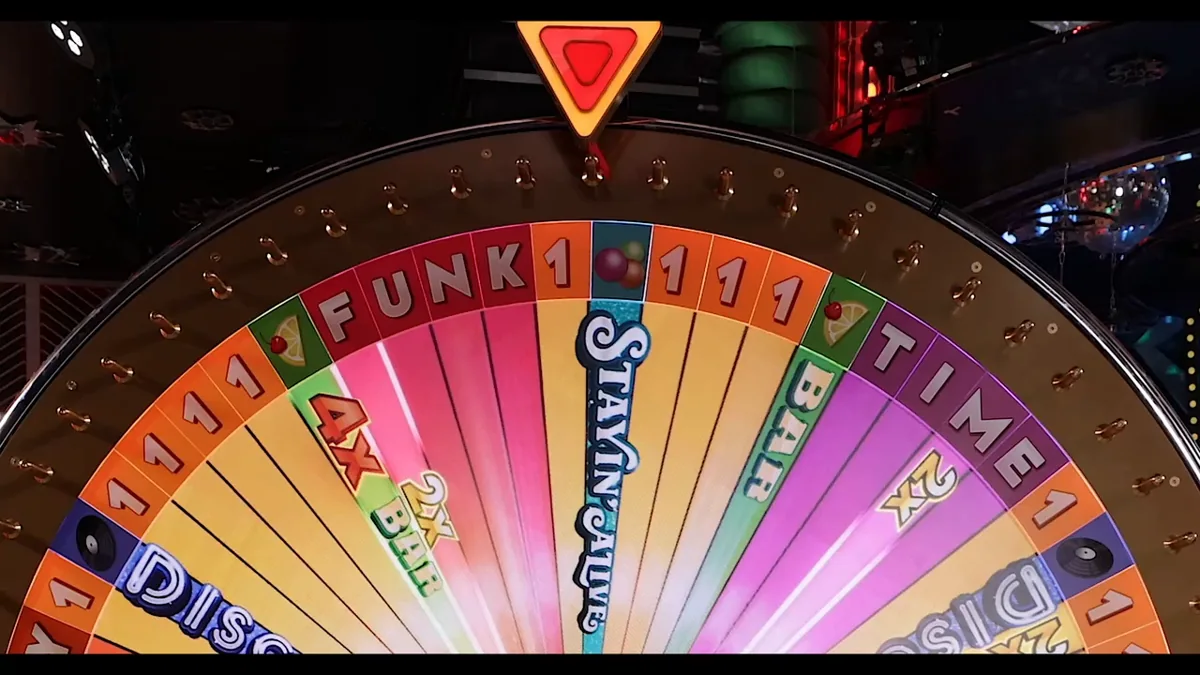
The twelve-letter shortcut covers twenty-four segments at the cost of twelve equal stakes. Backing all four bonuses covers twelve segments and costs four equal stakes. Broader coverage can make a partial return more frequent without making the average combined return exceed the total paid for that coverage.
Even a layout covering all seventeen possible outcomes does not guarantee profit. The winning selection settles according to its rules while all other stakes remain part of the round cost. Assess the total credited against that full cost; the fact that one selected position lights up is not a test of profitability.

Flat stakes reveal the real cost of a layout
Keeping the total round stake fixed makes comparisons easier: a loss does not automatically enlarge the next commitment. Record total stakes and total credits separately, then subtract the former from the latter for the net result. A session’s largest multiplier cannot substitute for that complete accounting.
A doubling sequence of one, two, four, eight and sixteen units spends thirty-one units over five consecutive losses, before considering the following step. None of those increases changes the wheel’s segment distribution. Eventually the remaining budget or an account limit prevents the next increase, so the progression has a practical boundary.
A long gap is not a betting signal
In the published layout, VIP Disco has one position among sixty-four. Using an independent, equally likely segment model, the probability of avoiding it for one hundred spins is (63/64)^100, or approximately 20.7%. A visually striking absence can therefore occur within that model without requiring a change in the wheel.
The next-spin probability after that absence remains 1/64. Sorting the archive by the most common letters or longest gaps describes the chosen sample’s history. It does not show that the least common letter has acquired an obligation to catch up on the next spin.
Do not backtest personal profit from bonus ceilings
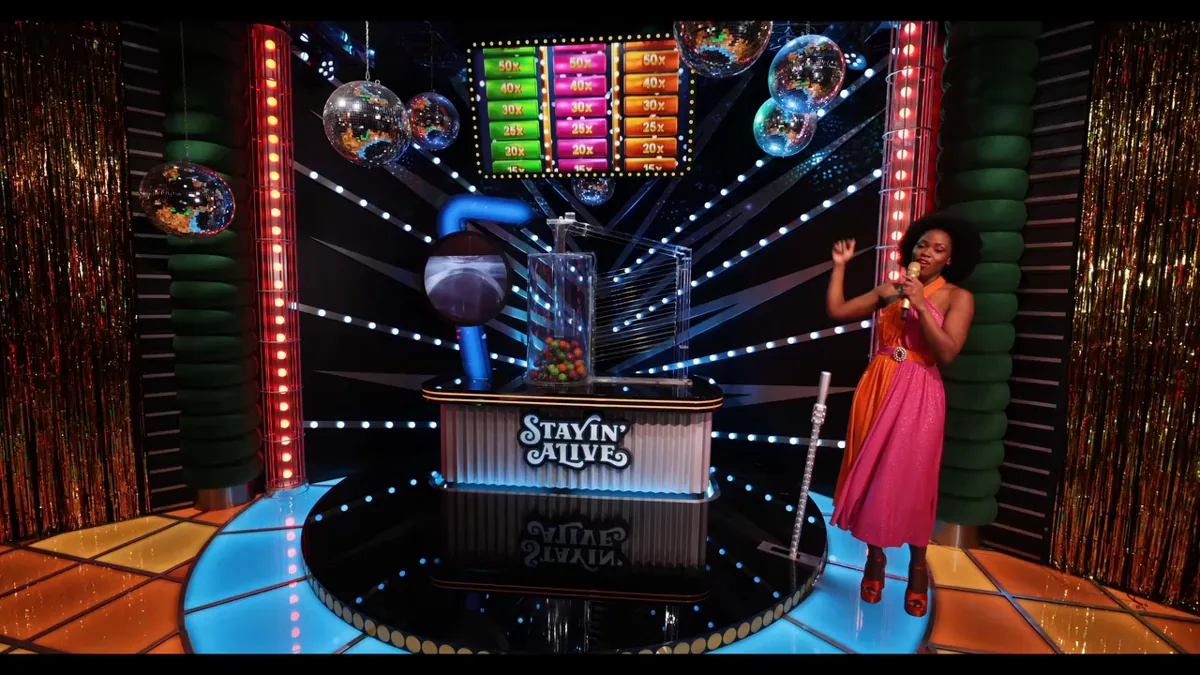
The public bonus figure is the best available result, while a player choosing another Bar glass or Stayin’ Alive team may receive a lower one. A replay crediting every historical best would therefore be optimistic. It would not represent the performance of a player choice that could be specified and reproduced in advance.
Use the tracker to study frequencies, timing and descriptive comparisons of events. Keep a personal session ledger from actual accepted bets and settled account credits. Finish at the spending or time limit chosen beforehand, and use account limiting or exclusion tools if keeping that decision becomes difficult.
Session budget calculator
Count every letter as its own bet, including letters chosen through the PLAY, FUNK or TIME controls. Then add any stake on 1 and each bonus position to calculate the complete round cost.
Total stake per round—
Planned turnover—
Full rounds covered by budget—
Budget after planned stakes, before returns—
Enter positive amounts and whole numbers for selections and rounds.
This calculation applies to the full layout. A successful letter does not automatically reimburse the stakes on other positions, and the plan assumes no additional return from a bonus outcome.
Official game information
Evolution · Funky TimeKnow the game? Try the table
Open the available play options and review the table limits before you start.
Play Now 18+ · Eligibility and operator terms apply.
THE PRACTICAL DESK
Put the numbers to work
Change the example inputs to see how the arithmetic changes. These tools use the figures you enter; they do not read your casino account or predict a game result.
Round balance
Follow the mechanic into another game
Disco Balls uses dance-floor bonus grids, while Gonzo’s Treasure Map offers a wall of selected squares. Compare what the player chooses, when that choice becomes fixed and what ends the feature.


Questions and answers
Is there a system that makes Funky Time profitable?
No stake sequence alters the game’s published house advantage. A budget can constrain the amount exposed, but it cannot ensure that the eventual result is positive.
Is the highest RTP a guarantee of fewer losses today?
No. A theoretical average over very long play does not prescribe either the sequence or the size of results in one short session.
Should I increase a bet after a bonus drought?
A long absence does not raise the chance on the next spin. Raising a stake increases the amount exposed while leaving the wheel’s distribution unchanged.
Can the historical maximum be used as a player return?
Not when the bonus feed contains the best available choice rather than the player’s selection. That calculation also requires the individual choices and the corresponding account settlements.
EVOLUTION GAMES GUIDE