Evolution · Rules and results
Crazy Balls: cards, draws and the bonus journey
How does Crazy Balls turn a wager into a completed round? Start with its event sequence, then compare the feature rules, the recorded history and the account conditions. The sections below connect those three parts without treating a promotional image as a complete rulebook.
Crazy Balls moves the familiar bonus-show atmosphere into a numbered-card game. A result begins with the ball draw, then depends on the card, its modifiers and any qualifying feature. The public history records only part of that sequence. This guide follows the four bonus routes alongside the main game, explaining what you need to know before turning a displayed multiplier into a meaningful account of a round.
20 / 60drawn / available balls
4regular cards, maximum
4bonus games
Evolutiongame provider
Loading records…
Records supplied by LiveCasinoData under CC BY 4.0 come from a third party, rather than an official Evolution results service. We retain the source’s categories and factors; missing records and reporting delays may occur. A multiplier in this dataset cannot confirm the amount paid to an individual account.
Guide sections
Evolution · Crazy Balls
Recorded preview
The preview is recorded; it is not a live broadcast or a playable casino table.
Cards and the numbered draw: the two routes through a round
Begin with the cards rather than looking for a main wheel. Evolution’s machine draws 20 numbers from a pool of 1–60, while players may choose up to four regular cards. Separate bonus cards connect that same draw to Coin Flip, Cash Hunt, Pachinko and Crazy Time. The familiar bonus names sit on top of a card-and-ball structure, so the opening stage follows different rules from a wheel show.
A published factor becomes useful only after you identify the card to which the stake belonged. The draw, a completed card and a bonus payment are connected events, but each describes a different stage. Another participant can receive a result that has no bearing on your selection. Read the sequence together before deciding what any single multiplier represents.
| Game detail | Confirmed description |
|---|---|
| Provider | Evolution |
| Main draw | 20 numbers from 1–60 |
| Regular cards | Up to 4 |
| Bonus features | Coin Flip · Cash Hunt · Pachinko · Crazy Time |
From accepted cards to the completed settlement
Follow the round in order: choose cards, reach the betting deadline, observe modifiers, watch the numbered draw and check settlement. Once bets close, the host triggers Free Space and multiplier allocation on the selected cards. The numbered balls follow from the machine; those two stages should be read separately.
As drawn numbers match card positions, they contribute to completed lines. Applicable modifiers then influence the calculation specified by the paytable. A bonus card meeting its conditions opens a separate feature, and a participant’s decision within that feature can affect the eventual result. Review the original card together with the finished bonus. An animation partway through play shows progress, whereas a settled return tells you the completed financial outcome.

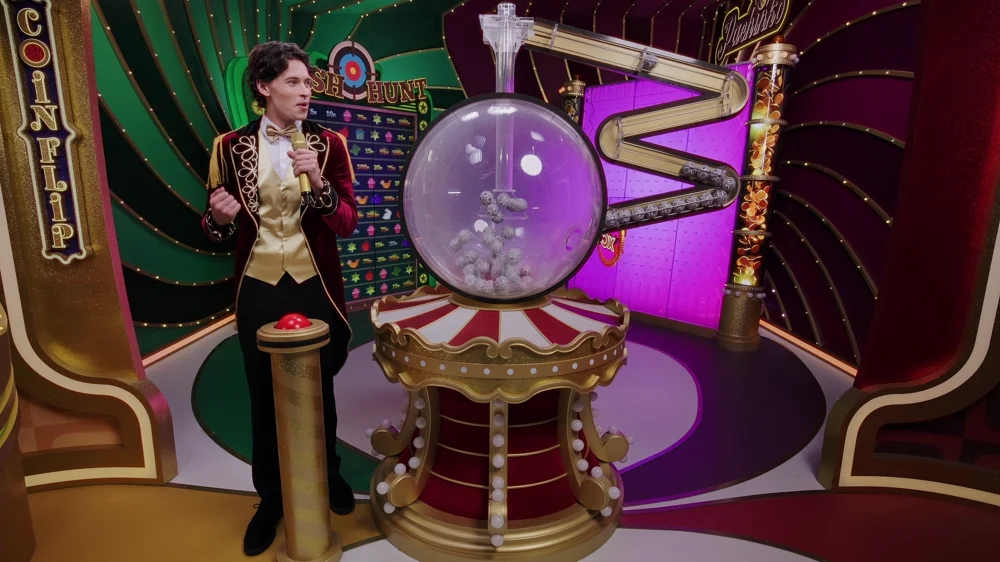

Where Standard, Line and Global multipliers apply
Standard, Line and Global are the three multiplier categories used in the main game. Evolution identifies those categories in its overview, although a brief public record cannot show every multiplier’s location on every card. Where a factor is attached to a numbered position, the matching number must be drawn before that factor becomes active.
Work from the actual marked squares, completed lines and selected-card rules when checking a calculation. Multiplying all numbers visible on screen ignores their different roles. The table’s help explains application order and payout limits, so consult it before interpreting a striking feature value. A headline multiplier describes a possible outcome under those rules; it does not establish an expected return or what the next draw will produce.
Add regular-card and feature-card stakes separately
Check the card’s complete commitment
The main game permits up to four regular cards. Bonus cards offer another way to participate in the draw, with their own stakes rather than automatically free entry alongside a regular card. Inspect the amount shown for every active selection, including feature cards, and reconcile those amounts with the overall round total before betting closes.
As a simple budget example, selecting four positions at one unit each commits four units to the round. Paying for another selection raises that commitment again. Additional cards increase paid exposure without ensuring a completed line. When comparing two approaches, use the same total round budget: otherwise the approach with a larger spend may appear stronger simply because more money was committed.
How each of the four features reaches a result
Each feature has its own result mechanism. Coin Flip decides between red and blue; Cash Hunt places individual selections behind targets. In Pachinko a puck travels through the board. The Crazy Time feature instead combines a wheel with the participant’s selected flapper.
A feature label identifies the event, but participant choices and the settlement rules are also needed to explain an individual payout. That is why one public factor can fail to describe every player’s return. Game bonuses should also be kept apart from operator promotions. A Crazy Balls feature belongs to the game itself; a deposit offer is a casino account promotion with separate eligibility and wagering requirements.
The fields available in the public history
The results dashboard receives third-party records with four fields: result, multiplier, bonus and created_at. Those entries are a source’s observations, not the transaction history of your casino account. In particular, the label Numbers does not reveal the full set of 20 drawn balls, every square on a participant’s cards or all the lines completed during that event.
A bonus flag says that the source tagged a feature record; it cannot confirm that your own card qualified. Use this feed for the order of events and the labels supplied, and use the game’s settled history to investigate a personal stake. Distinguish the page’s refresh time from the newest record’s timestamp: one marks a source check, while the other dates the supplied observation.

Read a percentage together with its sample
Percentages on the dashboard belong to the sample currently selected. For example, a chosen label appearing in 12 of 100 records has an observed share of 12%. The arithmetic describes those entries only. It does not reveal the next round, reproduce a full card paytable or calculate the theoretical return of an individual participant’s selections.
Before comparing percentages, inspect the period, loaded-record count and any indication that the newest data are delayed. A brief interval can offer very few observations, while a longer one may cover different sessions. Keep the record type and its definition consistent across comparisons. Rows in a public feed should not be renamed as physical balls or completed cards merely because they are being counted.
Keep the active cards visible on mobile
On mobile, cards and bonus buttons share a small display with stakes, a countdown and the studio video. Choose a layout that leaves the active card and combined stake legible. Locate game help, history, audio settings and the connection indicator before entering a real-money round, so you are not searching for them while a time-sensitive choice is open.
If rotating the phone conceals a control, let the accepted round settle before changing the layout again. A quick connection can improve the video but cannot remove account restrictions or ensure a last-second choice was accepted. Check the game’s confirmation rather than assuming that touching a button successfully delivered the instruction to the server.
Choose between watching and interactive free-credit play
A promotional clip shows the game’s appearance, while a replay shows a sequence already completed. Free-credit play is different again: it provides a playable session in which selections use a non-cash balance.
Use the word demo for the experience actually offered. The official showcase says that freeplay and particular features are jurisdiction-dependent. A video does not become an interactive table, and the public results dashboard does not accept bets. Even without an account or a paid stake, those viewing tools can help you recognise card labels, follow the progress of a bonus and compare the timing of recorded events.
Set limits using the combined round stake
Add the stakes on every active card to find the real cost of a round. Choose a session ceiling before opening the betting panel, keeping essential expenses outside that budget. Small chips can add up quickly when several selections are active, so the smallest displayed denomination is a poor guide to the amount actually committed.
Raising a stake after a loss increases exposure without changing what the next draw remembers: it does not remember earlier outcomes. Historical charts show variation, not a guaranteed recovery path. Set a time boundary alongside the money limit. If stopping becomes difficult, use the casino’s break or exclusion controls rather than repeatedly extending the session to chase a different balance.
Why the public feed cannot calculate RTP
Theoretical return concerns a specified bet and paytable across a very large number of plays. Reconstructing that calculation requires information that this feed does not supply, including card layouts, stakes and each relevant participant choice. The average of its multiplier column cannot fill those gaps.
Expressing one session’s result as a percentage does not make it the game’s RTP. Look up the exact bet and version in the table’s help. Shared feature names do not justify borrowing a Crazy Time return figure for Crazy Balls. When comparing information, give theoretical return, the observed frequency of records and personal net profit their own labels and calculations rather than merging them into one statistic.
Feature limits and actual payments measure different things
Evolution’s description gives a ceiling of 20,000x for the Crazy Time feature and a 10,000x cap for Pachinko. Each maximum belongs to the rules of that particular feature.
A maximum does not tell you how likely it is, how much money a player received or what every account can be paid. Read the currency, accepted stake and applicable payment cap together in the game and operator conditions. Before matching a screenshot to a public entry, establish whether its number is an intermediate factor, a completed feature multiplier or an amount of money. Those quantities cannot be compared as if they were identical.
The card game and the wheel game use different starting rules
The red door and familiar bonus names can make Crazy Balls and Crazy Time look alike, but the rounds start differently. One uses numbered cards and a ball draw; the other takes a bet on a position of a spinning wheel. Shared features do not bring across the complete paytable, qualifying conditions or return percentage. Open the rules when switching games instead of applying a remembered wheel approach to a numbered card.
Follow the Crazy Balls playing guide for the card-by-card sequence. It explains the difference between a card that qualified and a bonus that is merely being shown in the live studio stream.
A single-number chance does not describe a completed card
Take an unbiased draw of 20 distinct numbers from a pool of 60 as a mathematical illustration. Any one specified number has a 20/60, or one-third, chance of appearing. That calculation is about one number, not a completed line or entry to a feature. A card may require several positions to match, may already include Free Spaces and may apply modifiers with their own conditions. Those details change the event being considered.
Name the precise event before doing probability arithmetic, then identify the card rules that affect it. Combining unrelated headline percentages does not supply the missing model. Keeping the event clear allows a useful explanation while acknowledging that incomplete information cannot produce a reliable card-level payout calculation.
Reconstruct the full sequence behind a bonus highlight
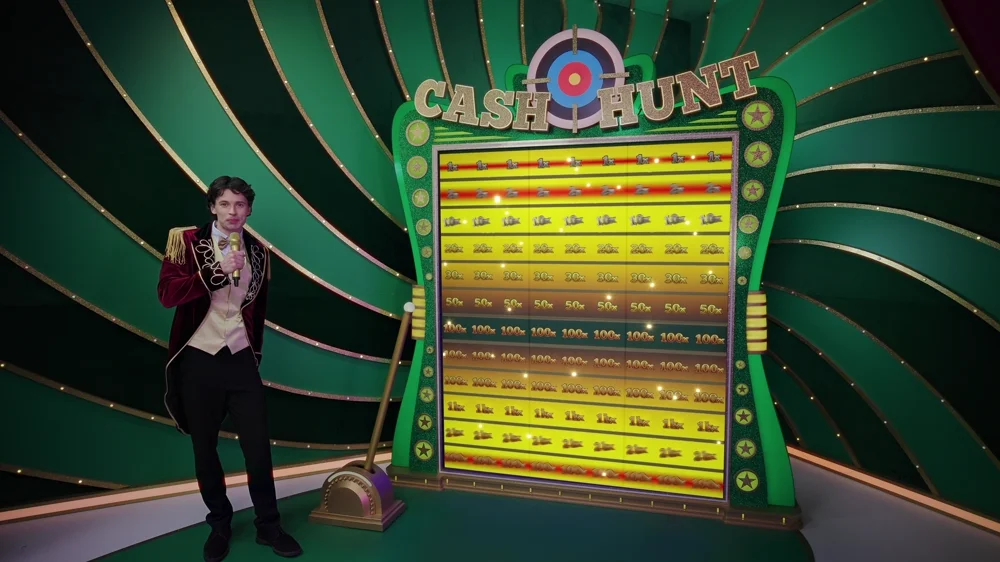
An exciting clip may begin well after the qualifying draw. Reconstruct its context by finding the title, card and event time, then watch every repeat through to the final value. For Cash Hunt, check whether the camera follows a single participant. For Crazy Time, note the chosen flapper. For Pachinko, distinguish a DOUBLE step from the landing that finally resolves the puck’s journey. Each of these details can change what the displayed number means.
The bonus guide places those feature differences side by side. A dramatic recorded example is useful for explaining mechanics, but it does not provide the complete sample needed to calculate the frequency of that outcome.
Match the source to the question you are asking
Choose the source that answers the question. Recent source observations belong in the results and statistics dashboard, with their timestamps. A payment on an accepted stake belongs in the operator’s account history. Rules are explained in the game’s help and the relevant guide, while access depends on the current operator catalogue and account eligibility. These resources work together, but none can stand in for all the others.
A precise question also makes comparisons safer. A public multiplier, an account payment and an advertised ceiling can each be a large number, yet measure different things. Establish the unit and the event represented before comparing their values or drawing a conclusion about a particular round.
Keep MONOPOLY Big Baller results in a separate dataset
Search queries sometimes put Monopoly beside Crazy Balls, but similar ball-draw staging does not make the datasets interchangeable. This section concerns Evolution’s Crazy Balls: a draw of 20 numbers from 60, regular cards, and the Coin Flip, Cash Hunt, Pachinko and Crazy Time bonus features. Keep that product identity attached to every comparison.
Confirm the exact title before grouping records. Numbers in this feed is a label, not the full list of 20 balls or a reconstruction of a particular card. A MONOPOLY result, a Crazy Time wheel spin and a Crazy Balls draw describe different games and should never be pooled into one statistical sample.
THE PRACTICAL DESK
Put the numbers to work
Change the example inputs to see how the arithmetic changes. These tools use the figures you enter; they do not read your casino account or predict a game result.
Round balance
Spending plan
Follow the mechanic into another game
Mega Ball and Lightning Ball offer two useful comparisons for a numbered-ball game: card lines in one, standard numbers plus a separate Powerball in the other. Matching a number is only the first step in reading the payout.


Review the table before starting a session
Review the available access options, then read the limits of the actual table before beginning a session.
Play Now 18+ · Eligibility and operator terms apply.
Answers to common card and results questions
How many balls are drawn in Crazy Balls?
The machine draws 20 numbers from the range 1–60. Seeing Numbers in the public history does not reveal that complete set of drawn numbers.
Can I select several regular cards?
Yes. Evolution permits up to four regular cards. Read the stake attached to every active card and check their combined round cost before confirming the selection.
What is the maximum Crazy Balls bonus multiplier?
The provider describes up to 20,000x in the Crazy Time feature and a 10,000x cap in Pachinko. They are feature limits, not typical outcomes or guaranteed account payments.
Does the history show my complete card result?
No. Public source records omit individual stakes, card layouts, completed lines and some participant choices within bonuses. They cannot serve as a personal winnings statement.
Can the recent results predict the next draw?
The labels tell you what was recorded previously. They do not identify the numbers, completed lines or bonus outcomes that the next round will produce.
EVOLUTION GAMES GUIDE