
Huge Reds
10–500xFish values before a bonus boost
Red has a single position. An extended interval without it is compatible with ordinary random play.
1 of 53 positions · theoretical share 1.89%
Ice Fishing handbook
Read the Ice Fishing layout as a map of distinct outcomes. The useful question is what each symbol changes: the qualifying wager, entry to a feature or the final credited amount. Compare those roles before interpreting a history label.
Learn the five outcome families and their proportions of the wheel. Read each recorded image with its multiplier: the category and the value describe different parts of a completed result.

| Image | Result family | Positions | Theoretical wheel share |
|---|---|---|---|
 | Leaf 1 | 23 | 43.40% |
 | Leaf 2 | 23 | 43.40% |
 | Lil’ Blues | 4 | 7.55% |
 | Big Oranges | 2 | 3.77% |
| Huge Reds | 1 | 1.89% |
An outcome icon does not promise a fixed payout. A leaf can be boosted, while a fish opens a separate feature. A useful completed record therefore identifies the symbol and reports its multiplier independently.
The rules distinguish the selected bet from the landed segment and the later catch. Use these captures with the illustrated wheel table to identify the stage represented by each symbol.
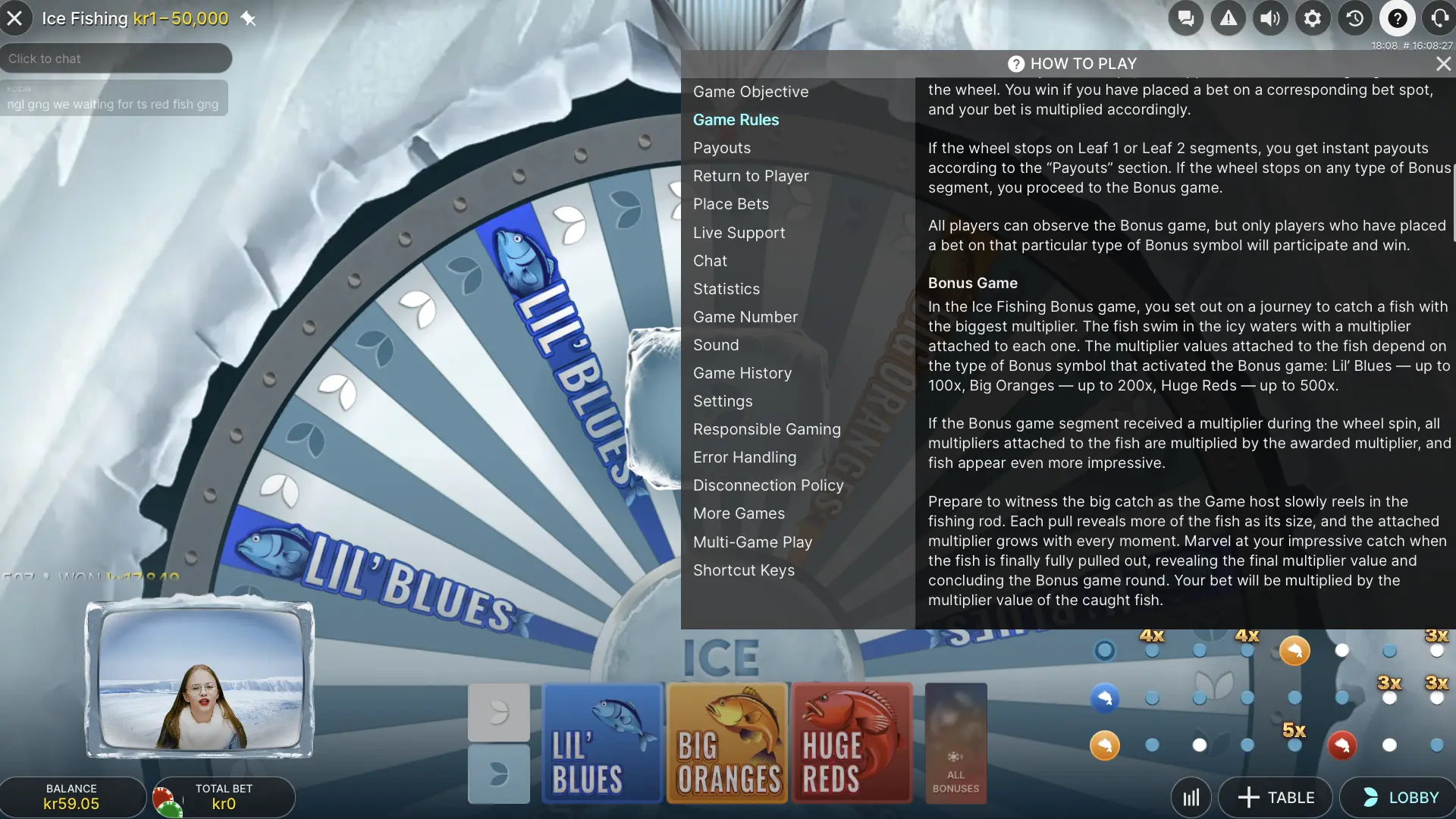
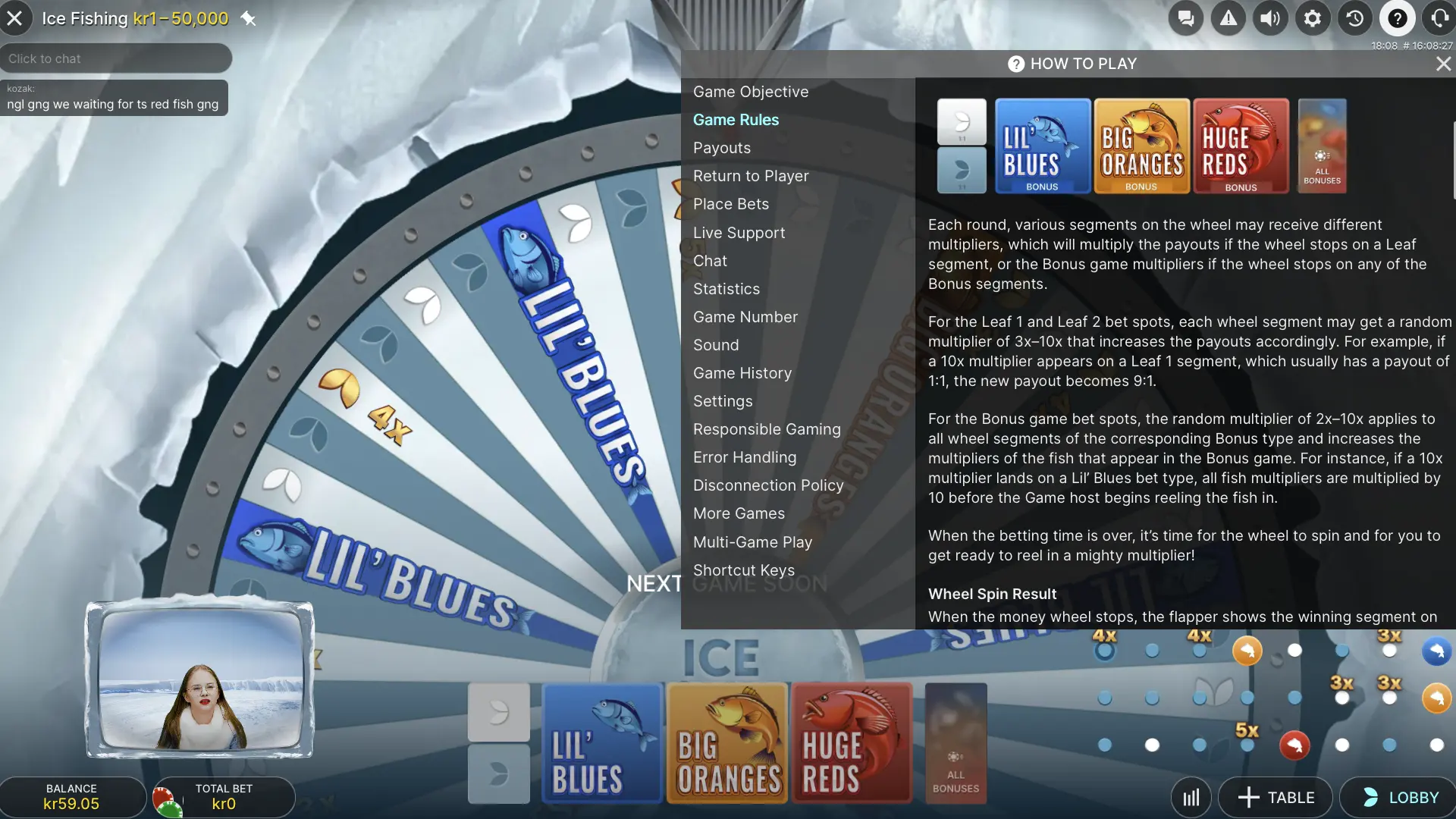
Interface images were captured in August 2025. Their currencies and limits belong to the specific table shown.
The leaves occupy 46 positions in total, but remain separate bets. Leaf 1 does not cover Leaf 2. If backing both, add their stakes to find the round’s combined commitment.
Each leaf has 23 positions, corresponding to approximately 43.40% of the wheel. Equal position counts do not force equal counts in a short sample. A session may favour one leaf in its recorded totals without changing the layout.
Distinct light and dark leaf images help you scan the feed. Written labels appear with the pictures, allowing identification without relying entirely on colour or screen contrast.
Use this checklist when comparing screenshots in different currencies. The supplied captures show “kr”, whereas the reviewed EUR rules provide another monetary example. Neither establishes a universal stake range or maximum return for every account.
The fish families
Red has a single position. An extended interval without it is compatible with ordinary random play.
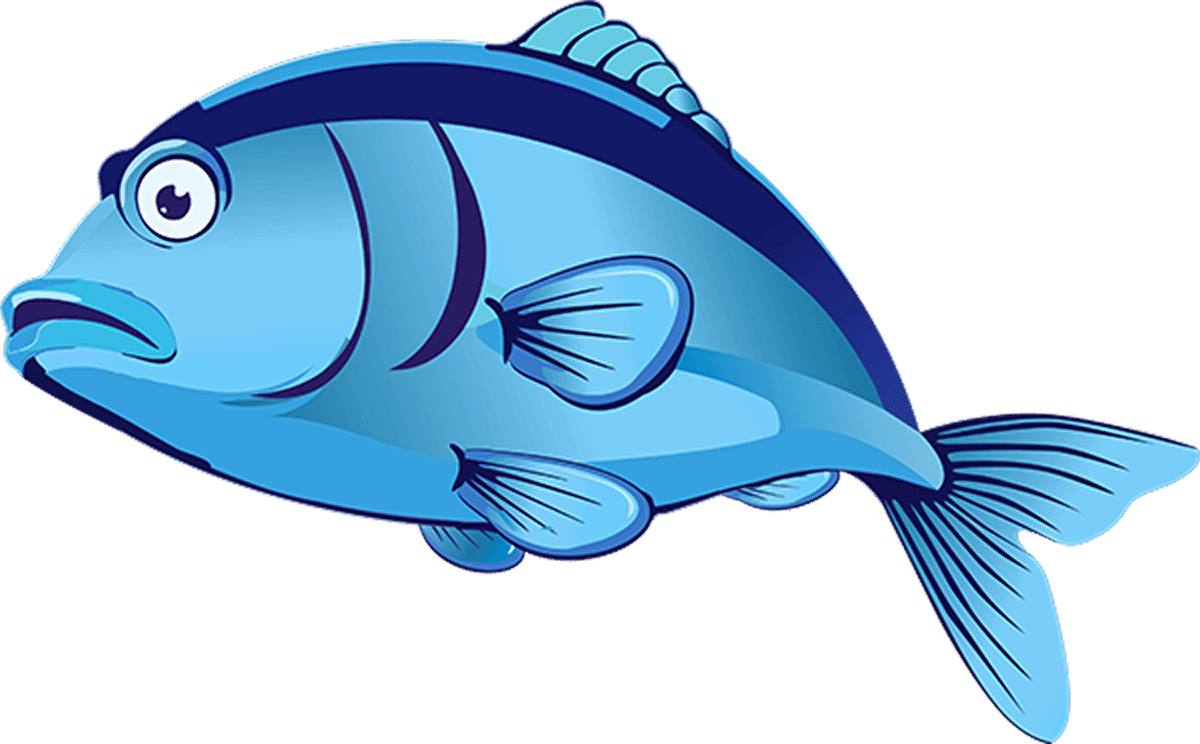
With four wheel positions, blue has the greatest trigger frequency of the individual fish categories.
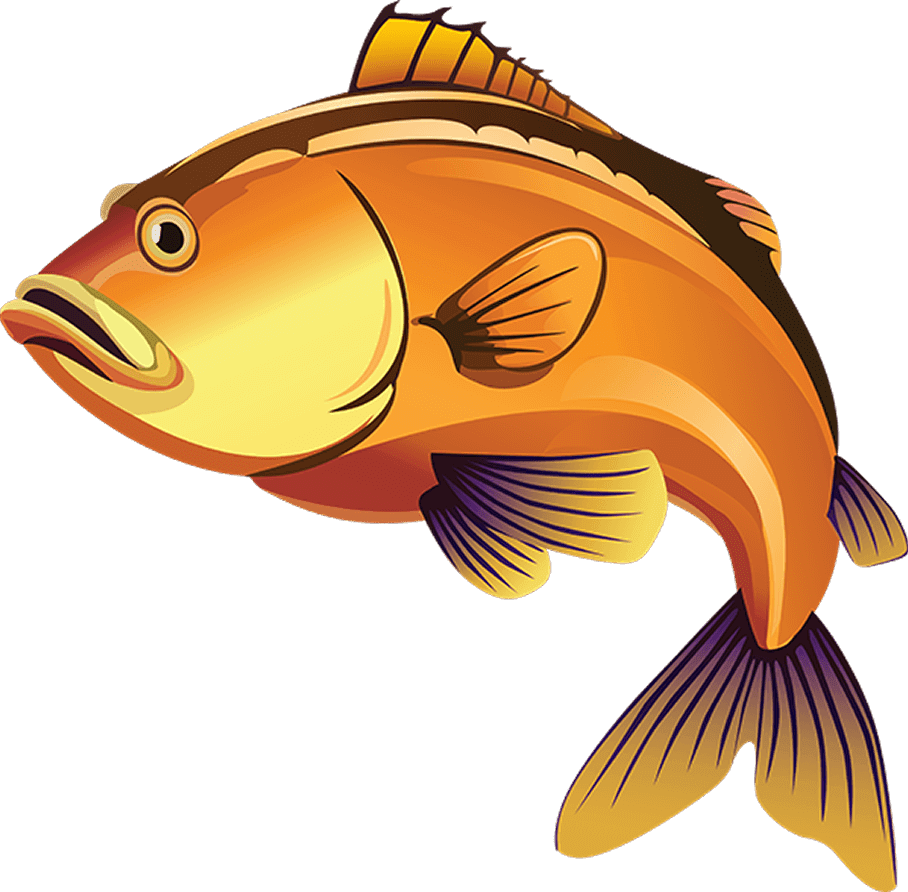
Two wheel positions activate orange, whose base range extends beyond blue’s.
Blue has twice orange’s position count and four times red’s. This compares trigger frequency, not the value of the fish revealed after a feature begins.
Compare the base range with the trigger share. A less frequent family may allow higher values while producing long gaps between hits. The artwork’s size or dramatic reveal does not improve its next-spin chance.
A pre-result boost is an intermediate event; the completed catch multiplier is a later value. A tracker containing one multiplier field may not capture all stages that produced the final figure.
The results display uses what the source actually provides: the outcome illustration, reported final factor and timestamp. It does not invent a “boost matched” flag when that information is absent.
The bonus guide shows how assigned boosts alter fish values. Open Latest Spins to see completed records using the same outcome icons.
Equal wheel counts and equal published RTP do not merge the leaves into one betting target. The captured interface distinguishes them with light and dark designs. Other trackers can crop the assets or change their backgrounds, so confirm the written name when comparing displays.
A single leaf covers 23 positions out of 53. The pair covers 46, approximately 86.79%. That combined landing share does not give either individual leaf an 86.79% chance, nor guarantee a profit whenever the pair covers a landed leaf.
At the ordinary 1:1 payout, equal stakes on both leaves offset each other when one wins. A fish loses both. Boosted positions make a separate contribution to theoretical return, which is why ordinary leaf counts alone cannot reproduce the stated RTP.
A run of one specific leaf differs from a run of either leaf. Ten consecutive non-bonus outcomes can contain both designs. One count follows a single target; the other follows the absence of every fish. Those are different events with different probabilities.
Four positions are blue, two orange and one red. With the fixed-wheel model, blue is therefore four times as likely to trigger as red on a spin. The fish drawing’s size neither encodes that ratio nor identifies the value of the later catch.
| Bonus family | Landing probability | Average spins per occurrence | Unboosted fish range |
|---|---|---|---|
| Lil’ Blues | 4/53 ≈ 7.55% | 13.25 | 3x–100x |
| Big Oranges | 2/53 ≈ 3.77% | 26.5 | 4x–200x |
| Huge Reds | 1/53 ≈ 1.89% | 53 | 10x–500x |
| Any of the three fish | 7/53 ≈ 13.21% | Approximately 7.57 | Varies with the triggered family |
The intervals are long-run averages calculated as one divided by the outcome probability, not countdowns. Red can repeat immediately or remain absent beyond 53 rounds. Across 53 independent spins, the chance of no red is (52/53)^53, about 36.4%. Such a wait is not unusual evidence of a malfunction.
Frequency views compare the observed sample with the wheel proportions. A small sample may contain no red, without reducing its theoretical chance to zero or making it overdue. A longer record describes more history; it does not change the next wheel. · frequency views
A wheel badge identifies an assigned boost. A number next to a fish in the feature belongs to that stage’s value display. The tracker shows a value reported after completion. Similar presentation can conceal these differences in timing and meaning.
A fish-family boost applies to that family’s wheel positions and increases its fish values if triggered. A leaf boost affects only the specific selected position. One leaf segment marked 4x does not make all segments of that leaf return 4x.
Outcome, multiplier and time alone are insufficient to reconstruct a boost assignment. The source must supply that information too. Here the icon identifies the outcome beside its reported final factor; a large number does not justify adding an invented boost badge.
Read the bonus explanation beside completed Ice Fishing rounds to connect the displays. The rules explain the relationship between stages, whereas one history record describes one finished outcome.
Wilds, scatters, paylines and free spins are familiar slot features, but they do not define these five Evolution selections. No three-fish match, left-to-right line or scatter count is required. A single fish segment activates its corresponding feature for qualifying bets.
The presenter is not a wild that substitutes for other symbols. Leaves are outcome selections rather than low-value card icons. There is no A–K–Q–J–10 paytable, and fish pictured together are not a reel combination.
All Bonuses is a shortcut for placing stakes, not a sixth wheel result. It applies the selected amount to every fish. Its separate button can resemble an extra outcome until you inspect the actual combined stake.
References to collector symbols, expanding wilds or reel free spins may describe another fishing-themed product. Verify the precise title and developer before using those rules. The main Ice Fishing overview identifies the Evolution game covered here.
Huge Reds is the red family: one wheel position and a published base range of 10x–500x without a boost. Big Oranges is the orange selection. Their size-related names do not make them interchangeable.
No. The illustration identifies a feature. The completed catch and applicable boost determine its result; artwork in a guide or a previous record does not predict the next spin.
THE PRACTICAL DESK
Change the example inputs to see how the arithmetic changes. These tools use the figures you enter; they do not read your casino account or predict a game result.
Disco Balls changes the multiplier ladder before a Result ball settles the draw. Super Color Game reads the colours of three dice. Both make useful comparisons when separating the main result from a feature sequence.
Practical questions
Red occupies one position out of 53. Its theoretical share is therefore one divided by 53, approximately 1.89% on a spin.
No. Both leaves have 23 positions, but each keeps its own betting position and result.
Colour identifies the bonus family. The catch and any relevant boost determine a separately recorded final multiplier.
The graphic may be cropped or drawn from another asset version. Check the written outcome as well as the picture when comparing records.
No. Evolution’s wheel has two leaves and three fish families. Wild substitution, paylines and scatter-triggered free spins are not part of these rules.
No. The selected amount is applied separately to all three fish. A ten-unit chip consequently stakes thirty across blue, orange and red.
An ordinary successful leaf earns the stake amount in winnings and returns the original stake too. Ten units therefore credit twenty altogether. Interpret boosted values using the table’s stated payout convention.
EVOLUTION GAMES GUIDE