Crazy Balls
Read the marks on a Crazy Balls card
Read the Crazy Balls layout as a map of distinct outcomes. The useful question is what each symbol changes: the qualifying wager, entry to a feature or the final credited amount. Compare those roles before interpreting a history label.
Several card states can look like a highlighted square in Crazy Balls, although they do not all mean that another ball appeared. Use this reference to distinguish numbers, allocated coverage and modifiers. It also explains why the brief fields in a public result row cannot replace the actual card layout and the paytable used to settle it.



Guide sections
Identify what a card mark actually describes
Identify the role of an element before interpreting its colour. A printed number marks a position on the card; a changed state can indicate coverage; a multiplier introduces a particular rule; and a completed line marks a pattern whose payment comes from the paytable. These layers may appear together on one card, but none contains all the information supplied by the others.
Describe both the object and its current state when explaining a screenshot. For example, distinguish a marked numbered square, an allocated Free Space and a displayed multiplier. Calling every bright square a win discards those differences. The reference table below summarises the labels; the full game rules decide whether the eventual pattern meets a condition for payment.
| Mark | Meaning |
|---|---|
| Number | A numbered position on the card |
| Free Space | Acts as a drawn number |
| Multiplier | Apply the relevant card rules |
| Completed line | Check its payment in the paytable |
Free Spaces change coverage, not the number of drawn balls
Free Space describes coverage already granted to a card position. It acts there as though the relevant number had been drawn, while the machine still draws its stated total of 20 numbers. Consequently, the card can show progress that the visible list of physical balls alone cannot explain. Count the card’s coverage separately from the machine’s extractions.
Compare the same card just after modifier allocation and later during the draw. Marks that existed before the first ball should remain allocated coverage, not extra physical extractions. This matters for probability as well as visual interpretation: a line partly covered by Free Spaces is a different event from a line that needs every position to match a newly drawn number.

Check a multiplier’s activation and scope
Standard, Line and Global name different categories of main-game modifier. Read the label beside the factor and check its scope in the table’s help. A value attached to one numbered position should not automatically be applied to every line or card. Confirm the activation condition and the area affected before including that factor in a calculation.
A visible multiplier badge does not prove that its number has been drawn or that a payable line exists. Ask in order whether the position was activated, which pattern qualifies and where the modifier applies. Those questions require the card-level layout and rules. The public feed omits that layout, so one published factor cannot settle all three questions on its own.
A feed label is not a picture of the player’s card
Keep the objects distinct: a regular card, a bonus card and a data-source row are not three names for the same thing. Numbers is a broad feed label rather than an image of your regular card. A named feature record likewise does not reveal every qualifying card or chosen target. The table’s visual vocabulary contains details that the external data service does not supply.
A useful saved example includes the title, card area and stage of the round. Cropping it down to a multiplier removes the context needed to explain that value’s role. If the concern is a personal settlement, preserve the operator’s round reference as well. A recognisable game symbol can help describe an event without becoming a complete record of the account transaction.
Give return percentages their correct meaning
Theoretical return concerns a specified bet and paytable across a very large number of plays. Reconstructing that calculation requires information that this feed does not supply, including card layouts, stakes and each relevant participant choice. The average of its multiplier column cannot fill those gaps.
When a rules panel gives an RTP, identify the bet named beside the percentage. RTP is not a card symbol or an extra factor to multiply into a displayed prize. A nearby chart percentage may instead show the share of loaded records. Naming each quantity prevents the surrounding artwork and numbers from suggesting that all cards and bonus selections have one identical theoretical return.
Attach each maximum to the relevant feature
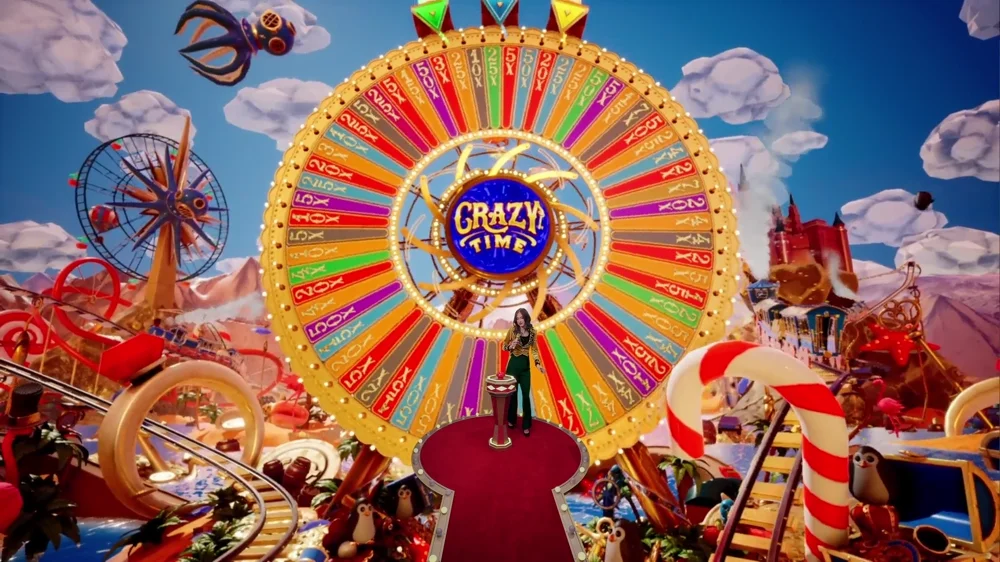
Evolution’s description gives a ceiling of 20,000x for the Crazy Time feature and a 10,000x cap for Pachinko. Each maximum belongs to the rules of that particular feature.
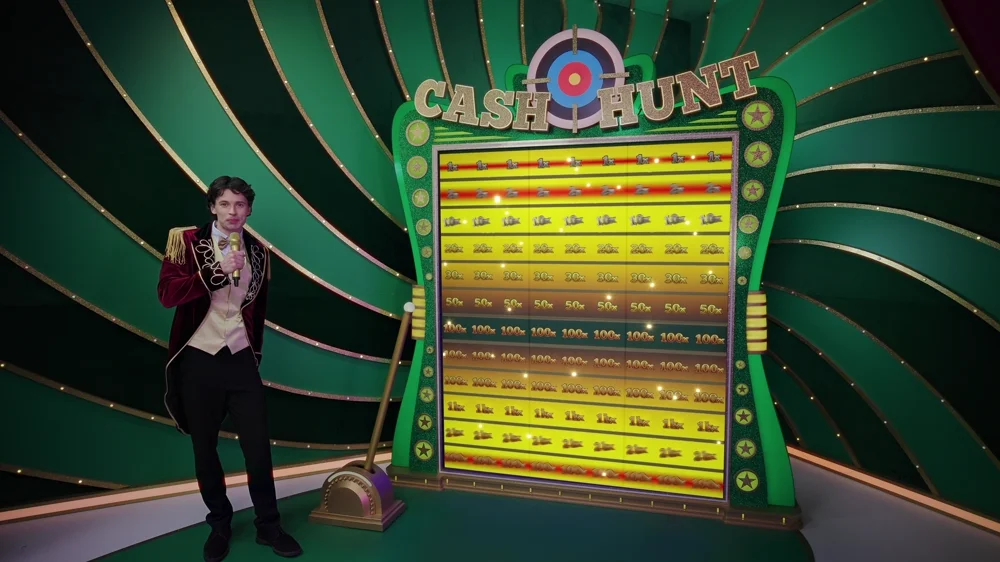
Associate each ceiling with its own feature. The 20,000x limit of Crazy Time and the 10,000x Pachinko limit are different rules, and neither number is a cash amount. Describe an image as showing a maximum, an intermediate factor or a resolved multiplier as appropriate. Add a stake and currency only where an actual payment is being described, rather than inferring them from a graphic.

Understand the limits of the four source fields
Three fields describe the published observation: result gives a label such as Numbers or a feature name; multiplier gives the associated numeric factor; and bonus indicates the source’s feature classification. Read these together rather than assuming that any one field supplies all the details of the underlying round.
The remaining field, created_at, dates the source observation. None of the fields on its own identifies your card, complete number set, stake or Cash Hunt target. Explain those omissions beside the history. If a field is missing or invalid, mark it unavailable instead of turning the gap into an invented zero, winning selection or completed draw.
THE PRACTICAL DESK
Put the numbers to work
Change the example inputs to see how the arithmetic changes. These tools use the figures you enter; they do not read your casino account or predict a game result.
Round balance
Follow the mechanic into another game
Mega Ball and Lightning Ball offer two useful comparisons for a numbered-ball game: card lines in one, standard numbers plus a separate Powerball in the other. Matching a number is only the first step in reading the payout.


Card-state questions answered
Does a Free Space add a ball to the draw?
No. A Free Space counts as a drawn position on its card without adding a physical ball to the draw, which still contains 20 numbers.
What multiplier types appear on the cards?
Evolution names three categories: Standard, Line and Global. Consult the live table’s help for their placement, order of application and relevant limits.
Can I calculate RTP from the multiplier history?
Not using this feed alone. The calculation requires a specific bet, its full paytable and relevant outcomes; the necessary individual card and stake information is missing.
EVOLUTION GAMES GUIDE