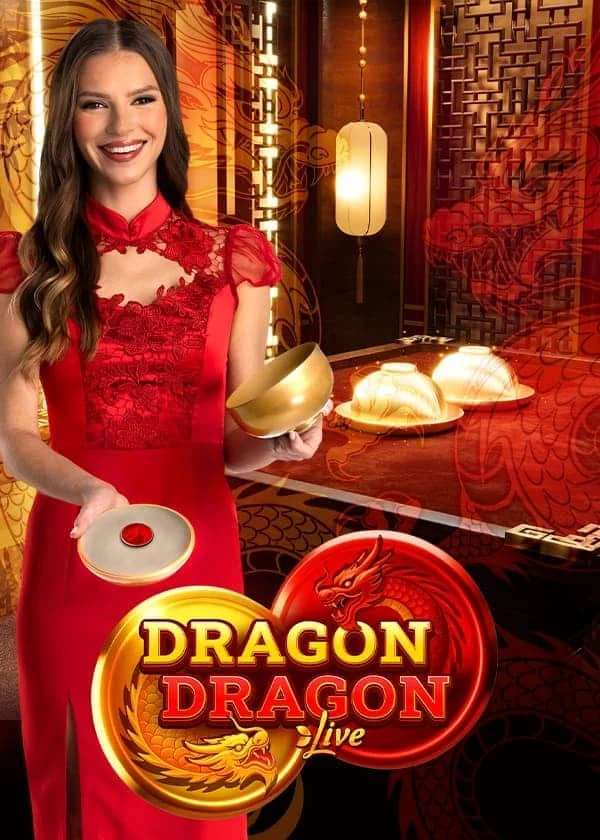
The game at a glance
| Topic | What it means |
|---|---|
| Format | Two coins in two bowls |
| Key rule | Red, Gold or Mixed category |
| Feature | No card-rank comparison |
Reading the reveal
Once betting closes, the dealer shakes the bowls and reveals the coins. The reveal is the relevant evidence for settlement. A red-and-gold combination is the mixed outcome regardless of which bowl supplies which colour; the interface's three labels therefore describe categories, not three identical physical configurations.
A clearly labelled probability example
A simple model helps explain that distinction. Two independent balanced coins produce RR, RG, GR and GG. Mixed occupies two of those four ordered configurations, while either matching colour occupies one. This is an explicitly hypothetical fairness model, not a claim that the product has a particular certified RTP or that its payouts equal those probabilities.
Why Dragon Tiger rules do not apply
The useful review focuses on the clarity of the reveal and the ticket's chosen category. Do not import Dragon Tiger rules merely because the names both contain Dragon: Dragon Tiger compares cards, while Dragon Dragon reveals coins. The official overview does not establish a complete numerical paytable here, so a result explainer can identify the winning category without inventing a payout calculator or a betting strategy.
An interactive category explainer
An educational selector can use two independent colour controls and then display the category they form. Red plus Gold and Gold plus Red should both highlight Mixed; swapping the bowls must not create a fourth payable category. Matching Red highlights the red pair, and matching Gold the gold pair. Such a tool explains classification without claiming to predict the dealer's reveal. It also provides a useful way to check accessibility: each colour needs a written label, so the result remains understandable without relying only on red and gold hues. The simulator should never be styled as a record of real rounds that the site has not received.
THE PRACTICAL DESK
Put the numbers to work
Change the example inputs to see how the arithmetic changes. These tools use the figures you enter; they do not read your casino account or predict a game result.
Round balance
Spending plan
Questions about this game
Are cards used?
No. Dragon Dragon uses two coins in two bowls.
Are the three labels necessarily equally probable?
No. In a balanced independent-coin illustration, mixed has two ordered configurations; each matching colour has one.
Official game information
Game details checked against Evolution’s product material. The active table’s help defines the edition, limits and settlement used by your operator.